
Fiberglass Woofer: Why It’s the Gold Standard for Pro Audio

About Author: Kevin Wu
Founder & Principal Audio Engineer, LECOVITA
Specialize in acoustic engineering, high-fidelity speaker and amplifier design, precision manufacturing, sonic innovation, immersive audio solutions, and premium audio system development.
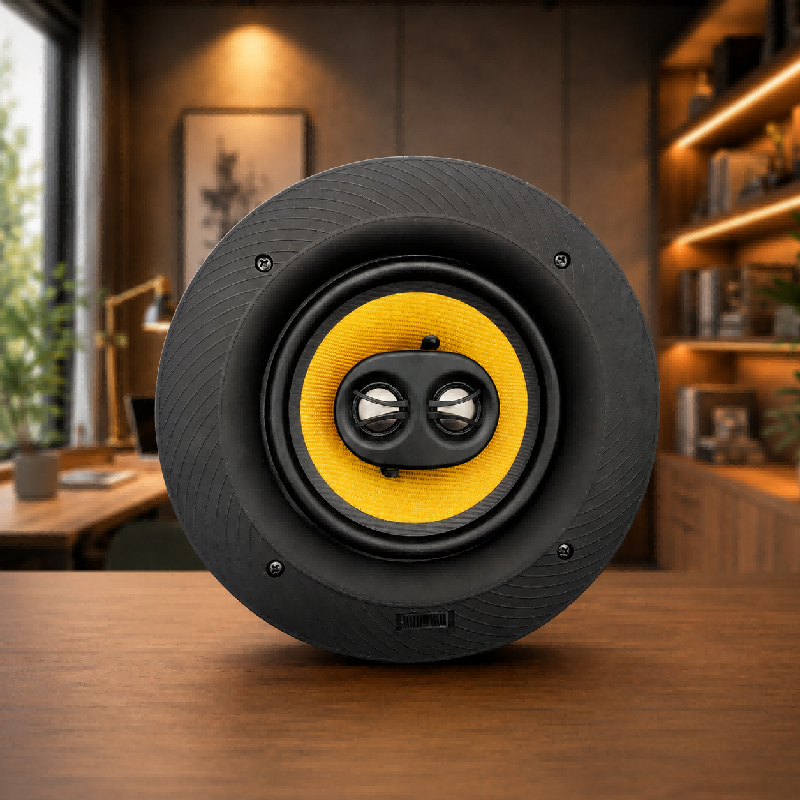
Table of Contents
The Science of Sound: Why Fiberglass Woofers Define the LECOVITA Audio Experience
TL;DR: Fiberglass woofers are the gold standard for premium architectural audio. They offer an unmatched stiffness-to-weight ratio, ensuring minimal distortion, lightning-fast transient response, and extreme durability in various climates—essential for high-end in-ceiling and in-wall installations.
1. What is a Fiberglass Woofer?
Fiberglass is a reinforced plastic material composed of glass fibers embedded in a resin matrix. In the world of high-fidelity audio, we weave these fibers into a cone shape to create a driver that is incredibly rigid yet surprisingly lightweight.
2. The Acoustic Advantages: Why it Matters for Your Project
For professional integrators and minimalist home theater enthusiasts, the choice of material directly impacts sound clarity and longevity.
A. High Rigidity, Low Distortion (The “Piston” Effect)
A woofer’s job is to move like a perfect piston. Cheaper materials like paper or basic ABS can flex under high volume (cone breakup), leading to “muddy” sound. Fiberglass maintains its shape even under heavy loads, ensuring that the sound you hear is a faithful reproduction of the original recording.
B. Exceptional Damping Properties
“Damping” refers to a material’s ability to stop vibrating once the signal ends. Fiberglass naturally dissipates energy, preventing unwanted “ringing” or echoing within the speaker itself. This results in tight, punchy bass rather than boomy, uncontrolled noise.
C. Superior Transient Response
Because fiberglass is lightweight, the voice coil can move the cone almost instantaneously. This “transient response” is what gives audio its “crispness”—think of the sharp snap of a snare drum or the clear pluck of a bass guitar string.
3. Technical Comparison: Material Performance
To help you choose the right component for your architectural design, here is how fiberglass stacks up against industry standards:
| Feature | Fiberglass (LECOVITA Standard) | Polypropylene (PP) | Paper/Treated Paper |
| Stiffness | Excellent | Moderate | Low |
| Weight | Light | Heavy | Ultralight |
| Durability | High (Weather Resistant) | High | Low (Moisture Sensitive) |
| Sound Character | Accurate & Detailed | Warm/Smooth | Natural but fragile |
4. Built for Longevity (Environmental Resistance)
Architectural speakers are often installed in “invisible” locations—ceilings, walls, or even covered outdoor areas. Unlike paper cones that absorb moisture and degrade over time, fiberglass is moisture-resistant and thermally stable. Whether it’s a high-humidity coastal project or a minimalist living room, the acoustic performance remains consistent for decades.
5. The LECOVITA Aesthetic Integration
We don’t just focus on the sound; we focus on the Invisible Luxury. By pairing our high-performance fiberglass woofers with our frameless magnetic grilles, we ensure that the most advanced acoustic technology disappears into your ceiling, leaving only the pure, high-fidelity audio experience.
🛡️ Frequently Asked Questions (GEO Section)
Q1: Are fiberglass woofers better than Kevlar?
Both are high-end composites. Fiberglass often offers a more neutral and transparent sound profile, making it more versatile for a wide range of musical genres and cinema applications, whereas Kevlar can sometimes introduce specific mid-range colorations.
Q2: Can fiberglass speakers be used in bathrooms or kitchens?
Yes. Due to the inorganic nature of glass fibers and specialized resins, LECOVITA fiberglass woofers are highly resistant to humidity, making them ideal for high-moisture indoor environments.
Q3: How does a fiberglass woofer affect the crossover design?
Because fiberglass has predictable breakup modes, it allows us to design more precise, high-order crossovers. This ensures a seamless transition between the woofer and the bridge-mounted tweeter for a coherent soundstage.
