
How to Build a Whole-Home Ceiling Speaker System: Room-by-Room Guide

About Author: Kevin Wu
Founder & Principal Audio Engineer, LECOVITA
Specialize in acoustic engineering, high-fidelity speaker and amplifier design, precision manufacturing, sonic innovation, immersive audio solutions, and premium audio system development.
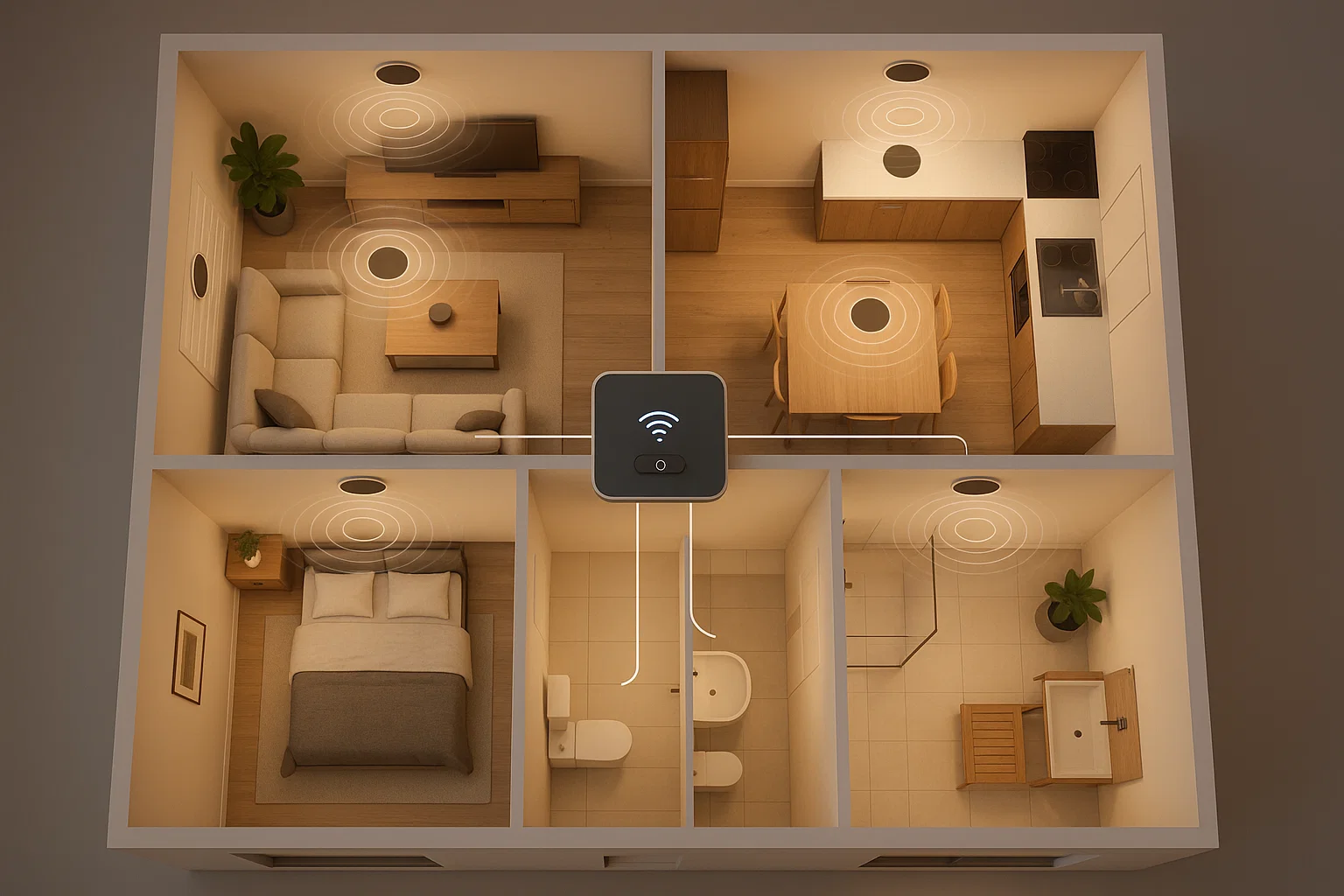
Table of Contents
- Why Whole-Home Audio Makes Sense Today
- Key Components of a Whole-House Ceiling Speaker System
- Living Room Ceiling Speaker System Setup: Immersive Sound with Minimal Footprint
- Kitchen and Dining Room Setup with Ceiling Speaker System
- Bedroom Ceiling Speaker Setup for Relaxed Audio and Smart Control
- Bathroom & Outdoor Ceiling Speaker Setup: Moisture-Proof Music Zones
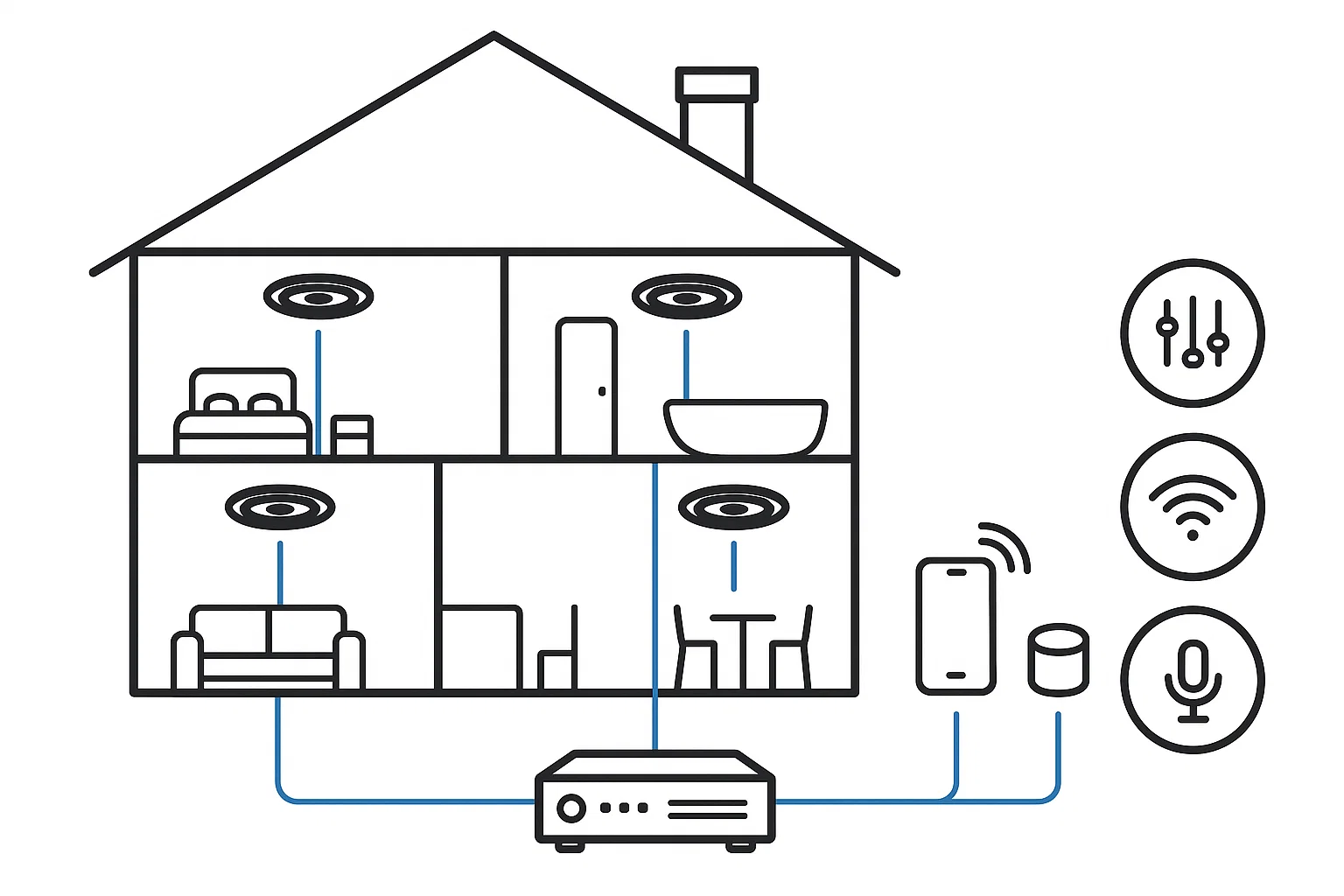
- Wiring, Amplifier Zones & Smart Control: Connecting It All Together
- FAQs – Your Ceiling Speaker System Questions Answered
- Ready to Build Your Whole-Home Ceiling Speaker System?
Imagine walking from your living room to your bedroom and hearing the same crisp, immersive music follow you seamlessly—no clunky speakers, no wires in sight. That’s the power of a well-designed whole-home ceiling speaker system. Whether you’re entertaining guests, cooking in the kitchen, or relaxing in a warm bath, consistent and high-quality audio elevates every part of your daily routine.
In this room-by-room guide, we’ll show you how to build a fully integrated ceiling speaker system tailored to your home’s layout and lifestyle. From choosing the right components to optimizing placement for each space, you’ll discover everything you need to create a unified audio environment that looks as good as it sounds.
As a trusted manufacturer of custom speaker solutions, Lecovita brings decades of experience in home audio integration—and this guide reflects the practical insights we’ve gained across countless real-world installations.
Why Whole-Home Audio Makes Sense Today
Within a modern home, seamless audio is no longer a luxury—it’s an expectation. Whole-home ceiling speaker systems are becoming a go-to solution for homeowners seeking consistent, high-quality sound throughout every room. Unlike bulky soundbars or floor-standing speakers that clutter up spaces, ceiling speakers blend into the architecture, delivering immersive background music or theater-quality audio without visual interruption.
From the kitchen and living room to bedrooms, bathrooms, and even outdoor patios, a properly designed ceiling speaker system creates a unified audio experience that complements your lifestyle. Whether you’re hosting a dinner party, winding down with a podcast, or managing a smart home system, in-ceiling speakers offer exceptional clarity and wide dispersion—without sacrificing floor space or aesthetics.
More importantly, thanks to advancements in wireless audio technology, multi-zone speaker systems can now be controlled via apps, voice assistants, or centralized control panels. This means you can enjoy personalized sound in each room or sync music across the entire house with a single tap.
✅ Lecovita Tip: Our custom ceiling speaker systems are engineered with home integration in mind—designed to work flawlessly with smart home hubs like Alexa, Google Home, and Control4.
Key Components of a Whole-House Ceiling Speaker System
Building a reliable whole-home ceiling speaker system isn’t just about selecting a few speakers—it’s about designing an integrated network of components that work in harmony. Below are the essential elements you’ll need to create a seamless multi-room audio experience.
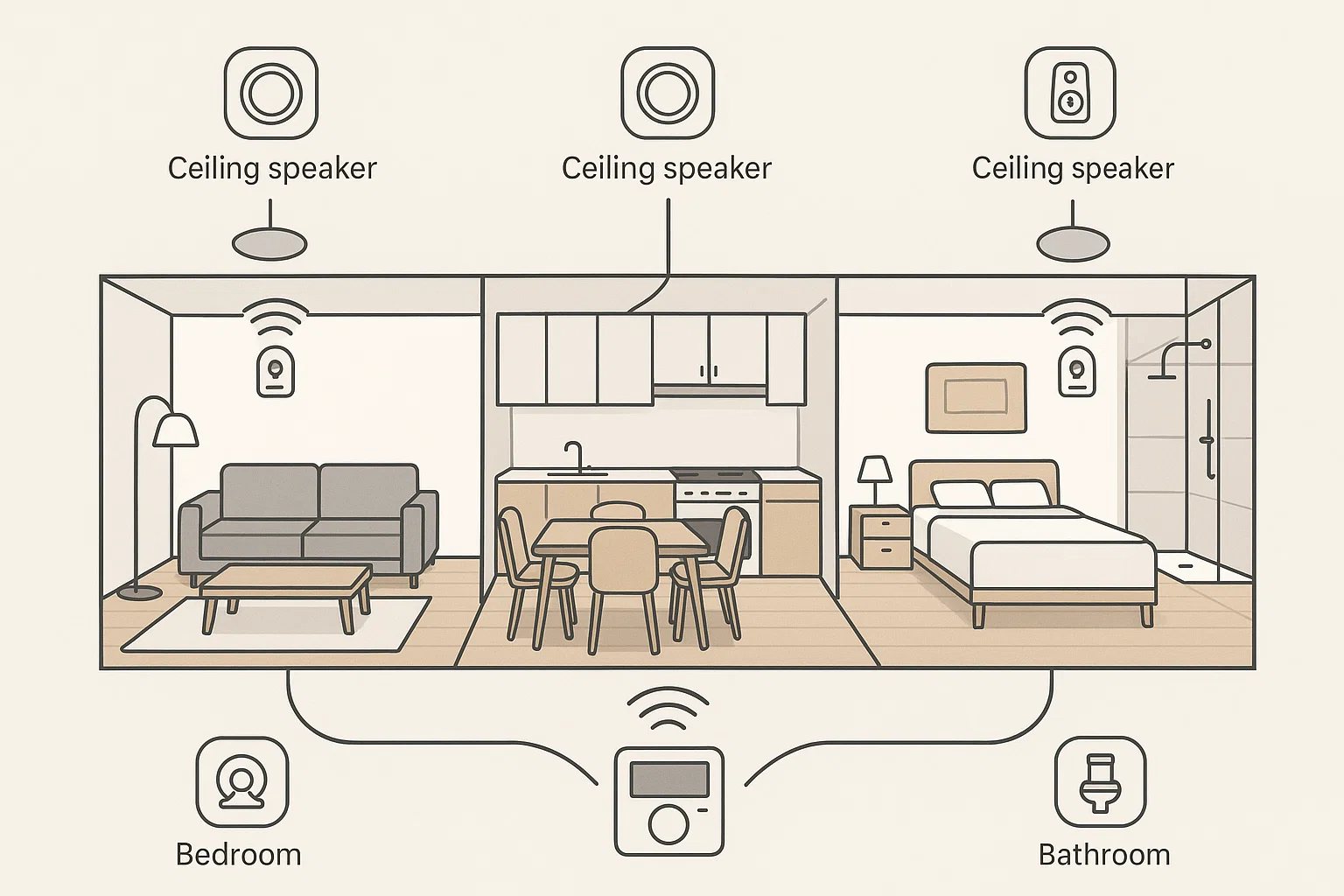
In-Ceiling Speakers
At the heart of the system are the speakers themselves. In-ceiling speakers are designed to blend into your home’s architecture while delivering balanced sound across the space. Depending on room size and purpose, you might use:
-
Single stereo speakers for small rooms (e.g., bathrooms, hallways)
-
Paired mono speakers for larger areas like living rooms or kitchens
-
Moisture-resistant models for humid environments like bathrooms or covered patios
✅ Lecovita Pro Tip: For consistent audio tone throughout your home, choose speakers from the same series or brand line.
Amplifiers or Audio Receivers
Most ceiling speakers are passive, meaning they require external amplification. The amplifier serves as the system’s “engine,” powering your speakers and distributing sound to the right zones. Key considerations:
-
Match amplifier power output to speaker wattage and impedance
-
Use multi-zone amplifiers for independent volume/control in different rooms
-
Consider networked amplifiers for wireless control via smartphone or tablet
🎯 Bonus: Some systems allow integration with voice assistants like Alexa or Google Assistant—great for hands-free control.
Source Devices
Think of these as the audio “fuel.” Whether you’re streaming music from Spotify, playing a podcast, or watching TV, source devices feed content into your system:
-
Smartphones, tablets, or computers (via Wi-Fi/Bluetooth)
-
Smart TVs or streaming boxes
-
Networked media servers or home automation hubs
For whole-house sync, ensure your sources are compatible with multi-room audio protocols like AirPlay 2, Chromecast, or proprietary app-based systems.
Audio Distribution Hub or Matrix Switch
If you’re managing multiple sources and zones, an audio distribution unit or matrix switch allows precise routing—so you can play jazz in the kitchen while someone else enjoys a movie in the living room. While optional for small setups, it’s essential for larger homes or luxury projects.
Smart Control System (Optional but Powerful)
For the ultimate convenience, integrate a smart home controller that centralizes control over zones, sources, and volume. Popular platforms include:
-
Control4
-
Crestron
-
Sonos (if using Sonos-compatible ceiling speakers)
-
LECOVITA’s own customizable control modules
Speaker Wire & Accessories
Even the best system can falter without proper wiring. You’ll need:
-
High-quality 16 or 14-gauge speaker wire
-
Fire hoods (often required by building codes)
-
Backboxes for improved bass response and sound isolation
-
Wall plates or wireless receivers depending on your layout
🛠️ Planning tip: For new builds or renovations, pre-wiring your home for ceiling audio can save both cost and hassle down the road.
✅ Summary
| Component | Purpose |
|---|---|
| In-Ceiling Speakers | Discreet sound delivery in each room |
| Amplifiers | Power source for speakers |
| Source Devices | Music, TV, podcast content providers |
| Distribution Hub | Manages audio flow between zones & sources |
| Smart Control Unit | Centralized user interface and automation |
| Cables & Accessories | Safe, efficient physical infrastructure |
Living Room Ceiling Speaker System Setup: Immersive Sound with Minimal Footprint
The living room is the heart of most homes—and it deserves an audio system that doesn’t just sound amazing, but looks seamless. A well-placed ceiling speaker system can turn your living space into a multi-functional audio zone: for watching movies, casual music streaming, or immersive gaming—all without bulky speakers ruining your interior design.
Speaker Placement for Optimal Soundstage
Proper placement is key to achieving a cinematic soundstage in your living room. For a traditional rectangular layout, install two ceiling speakers above the main seating area, spaced evenly about 6–8 feet apart. For larger rooms or open floor plans, consider 4 speakers in a square or staggered layout for full-room coverage.
🔊 Pro tip: Always place speakers at equal distances from walls to reduce reflection and echo.
Matching with Your TV and Home Theater System
If your living room also serves as your main entertainment zone, integrate your ceiling speakers with your existing home theater setup.
-
Use front in-wall speakers + rear in-ceiling speakers for hybrid surround sound
-
Connect your AV receiver’s Zone 2 or Zone B to drive the ceiling speakers separately
-
Add a subwoofer for low-end punch, especially if your ceiling speakers are 6.5″ or smaller
✅ For Dolby Atmos, use angled directional ceiling speakers above your seating zone to simulate overhead effects.
Living Room Audio Use Cases
Here’s how most homeowners use living room ceiling speaker systems:
-
TV + Movies: Immersive, discreet surround sound
-
Music Streaming: App-controlled background music
-
Gaming: Lag-free, theater-like sound environment
-
Entertaining: Party mode synced with kitchen/dining zones
LECOVITA Solutions for Living Room Audio
At Lecovita, we offer customizable ceiling speaker solutions for all living room sizes—from compact apartments to open-plan villas. Whether you want a flush-mount design, paintable grille, or premium drivers for high-resolution audio, we can configure a system tailored to your layout and expectations.
🛠️ Want help designing your layout? Contact our design support team for a free consultation.

Kitchen and Dining Room Setup with Ceiling Speaker System
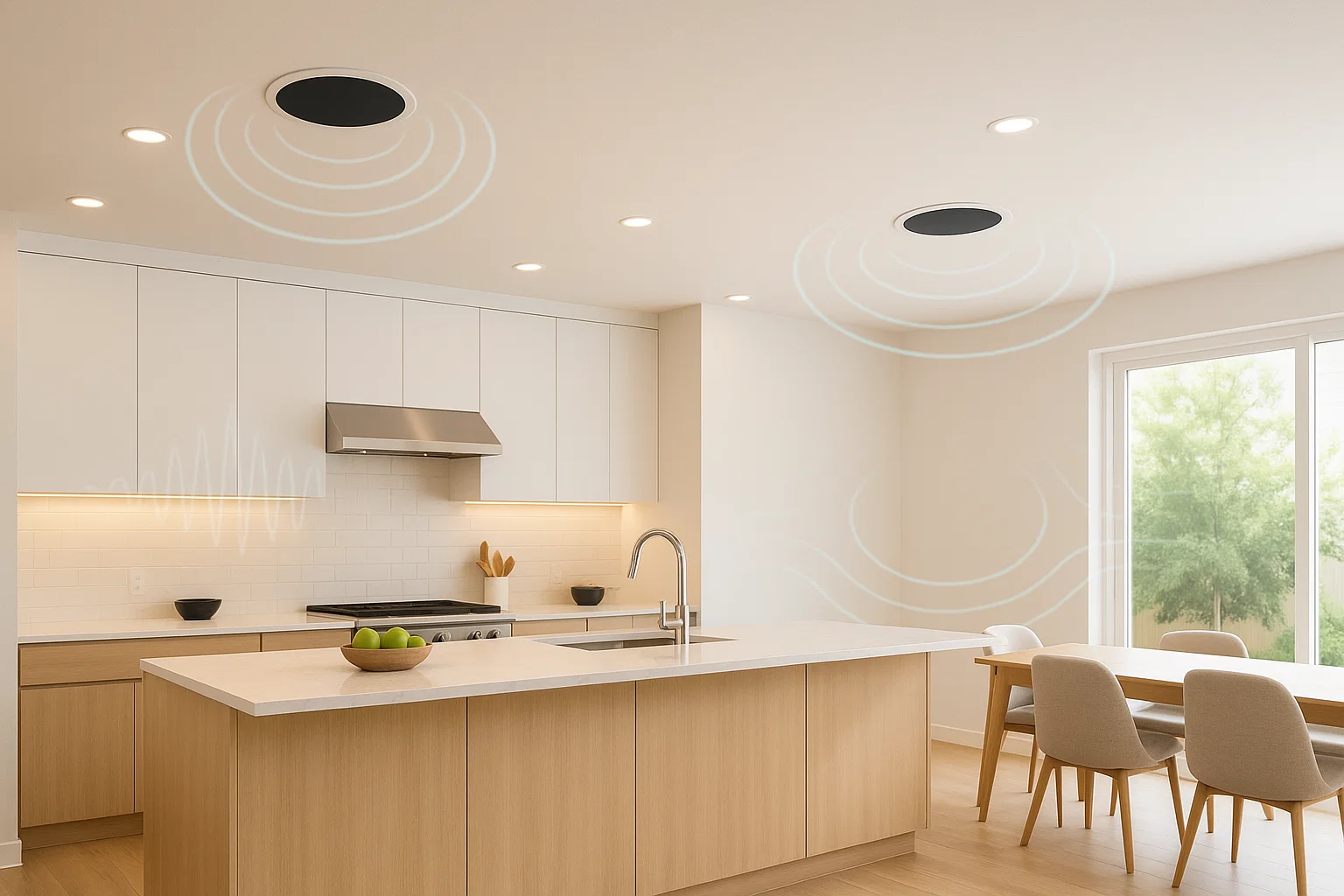
The kitchen and dining room are spaces where functionality meets hospitality—and sound plays a vital role in both. Whether you’re preparing a meal, enjoying breakfast, or hosting a dinner party, a ceiling speaker system can enrich the experience with background music or synchronized audio that moves with you from prep to plate.
Audio That Moves with You While You Cook
Unlike living rooms where sound is focused, kitchen audio should prioritize even coverage across work zones.
-
One or two ceiling speakers are usually sufficient for small to medium kitchens.
-
For open kitchen layouts, use two speakers spaced evenly near the counter and sink areas.
-
Sync with the dining zone to ensure audio continuity during gatherings.
🍳 Pro Tip: Choose wide-dispersion speakers that maintain clarity even in noisy or echo-prone environments.
Speaker Placement to Avoid Heat and Steam
Kitchens present unique acoustic and environmental challenges:
-
Avoid placing speakers directly above stovetops or ovens.
-
Maintain at least 1.5–2 feet of clearance from light fixtures and ventilation ducts.
-
Use moisture-resistant ceiling speakers to guard against steam and grease buildup.
✅ Lecovita offers IP-rated speaker models with protective coatings—ideal for humid or high-use kitchens.
Linking Kitchen and Dining Zones for Seamless Playback
The kitchen and dining room are often part of a shared open-plan space. Instead of controlling them separately:
-
Use a multi-zone amplifier to group them under a single audio zone.
-
Integrate with voice control or mobile app for volume and source switching.
-
Enable “party mode” to sync with living room speakers when entertaining.
🍷 A seamless kitchen-to-dining sound transition keeps the ambiance smooth—whether you’re flipping pancakes or pouring wine.
Recommended Ceiling Speaker System Solutions for Kitchen Use
Lecovita recommends the following features for kitchen/dining applications:
-
6.5-inch moisture-resistant drivers for balanced output
-
Magnetic grilles for easy cleaning or repainting
-
Low-profile design to match modern recessed lighting
-
Optional wireless modules for retrofit-friendly setups
Need help matching speaker specs to your kitchen layout? Talk to our team about pre-configured bundles.
Bedroom Ceiling Speaker Setup for Relaxed Audio and Smart Control
The bedroom is your sanctuary—your space for rest, relaxation, and personal rituals. With a properly configured ceiling speaker system, you can enjoy everything from soothing sleep playlists to morning news briefings, all without cluttering your nightstands or running messy wires across the room.
Sound Should Be Subtle, Not Overpowering
Bedroom audio is all about balance. You want crisp, clear sound that fills the room softly—not booming bass or echoing highs.
-
Install two ceiling speakers centered above the bed or evenly spaced for full-room coverage.
-
For small rooms or minimalist setups, a single stereo in-ceiling speaker is often sufficient.
-
Choose speakers with adjustable tweeters to angle sound toward the bed or reading area.
💤 Pro Tip: Use speakers with dampened high-frequency response to avoid harsh treble during nighttime listening.
Integrate with Smart Home for Voice & App Control
Convenience matters most in the bedroom. Many homeowners now expect hands-free control over lighting, temperature, and now—audio.
-
Connect your speakers to smart amplifiers or streaming hubs compatible with Alexa, Google Assistant, or Apple HomeKit.
-
Set scenes or routines (e.g., “Good Morning” starts your playlist and opens the blinds).
-
Control volume, source, and zones via smartphone without leaving the bed.
✅ Lecovita speaker systems integrate seamlessly with major smart home ecosystems for effortless bedtime automation.
Night Mode and Zoned Audio Tips
Don’t wake up the whole house. Bedroom speakers should be:
-
On separate amplifier zones with independent volume control
-
Limited in dynamic range or programmed with night mode EQ curves
-
Isolated with back boxes or acoustic barriers to prevent sound bleed into other rooms
🛏️ If your ceiling shares a cavity with a nursery or guest room, use acoustic insulation to ensure a peaceful night for everyone.
Lecovita’s Bedroom Audio Solutions
For bedrooms, we recommend:
-
Ultra-slim ceiling speakers (with ≤70mm mounting depth) for tight ceiling spaces
-
Magnetically shielded drivers to avoid interference with TVs or smart hubs
-
Discreet paintable grilles to blend into ceiling finishes
-
Optional Bluetooth/wireless-ready modules for simplified installation
Whether you’re building a calming retreat or a tech-integrated sleep space, Lecovita’s bedroom solutions offer both serenity and smart control.
Bathroom & Outdoor Ceiling Speaker Setup: Moisture-Proof Music Zones
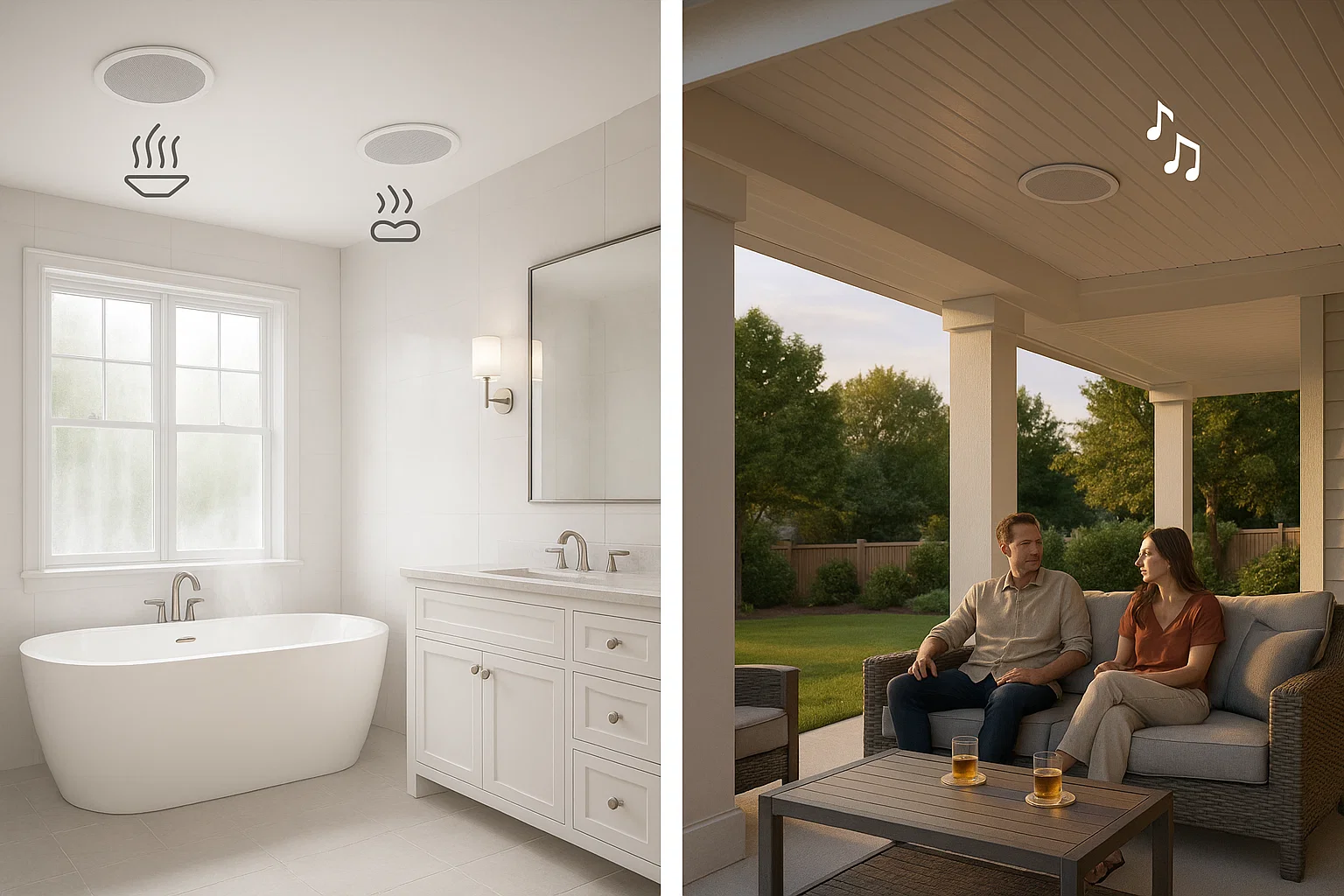
Ceiling speaker systems aren’t just for living rooms and bedrooms—they can also elevate spaces like bathrooms, patios, and covered outdoor areas. With the right moisture-resistant components, you can enjoy your favorite music, news, or podcasts even while taking a relaxing bath or hosting a backyard BBQ.
Waterproof and Weather-Resistant Speaker Essentials
These environments demand specialized hardware:
-
Use IP-rated ceiling speakers that are designed to withstand humidity, splashes, and outdoor conditions.
-
In bathrooms, prioritize sealed driver enclosures and anti-corrosion coatings.
-
For patios or eaves, make sure the speakers are UV-protected and designed for temperature fluctuations.
🚿 Lecovita’s marine-grade models are engineered to perform flawlessly in damp and semi-exposed spaces.
Ideal Speaker Placement for Bathrooms
Bathrooms present acoustic and environmental challenges:
-
Install speakers away from direct water sources (not above showers or tubs).
-
Use smaller 5.25–6.5” moisture-resistant models for compact enclosures.
-
Add fire-rated back boxes to meet code and improve sound quality.
🧼 For en suite bathrooms, consider syncing the audio zone with the bedroom for a seamless transition.
Outdoor Zones for Patios and Terraces
Outdoor ceiling speakers are perfect for:
-
Covered patios, verandas, or gazebos
-
Outdoor kitchens or BBQ areas
-
Poolside pergolas with soffit-mounted speakers
Tips:
-
Mount speakers under cover to shield from rain/sun
-
Use multi-zone control so outdoor audio can be turned off separately
-
Combine with landscape audio for full garden coverage
☀️ Don’t forget to install weatherproof volume controls or use app-based systems to manage playback.
Lecovita’s Moisture-Ready Product Line
For wet or semi-exposed zones, Lecovita offers:
-
IP55+ ceiling speaker models with aluminum grills and sealed crossovers
-
Compact depth units for tight soffits or ceiling cavities
-
Custom finishes for matching white, black, or natural wood eaves
-
Smart-ready modules for zone control from indoors or on the patio
No matter the space, we engineer solutions that sound great and survive the elements.
Wiring, Amplifier Zones & Smart Control: Connecting It All Together
A whole-home ceiling speaker system is only as good as its wiring, amplification, and control setup. Whether you’re retrofitting one room at a time or planning for an entire house during construction, having a smart, scalable infrastructure ensures clean audio, minimal interference, and flexible control for years to come.
Plan Your Speaker Wiring Early
For best results—especially in new builds or renovations—pre-wiring is essential.
-
Use CL2/CL3-rated speaker wire for in-wall/in-ceiling runs
-
16-gauge wire is sufficient for most rooms; 14-gauge is better for long runs or high-powered speakers
-
Plan cable paths to avoid crossing with AC power lines or HVAC ducts
-
Route all cables to a central media cabinet or rack, even if not using every zone immediately
🛠️ Tip: Label each wire by room or zone to simplify future upgrades or troubleshooting.
Use Multi-Zone Amplifiers for Flexibility
To enjoy different audio in different rooms, you’ll need multi-zone amplification:
-
4-zone or 6-zone amplifiers let you split rooms into independent control areas (e.g., bedroom vs. kitchen)
-
Connect each room’s speaker pair to its own amplifier channel
-
Some amplifiers include built-in streaming modules, eliminating the need for external sources
If you want everything in sync (e.g., “Party Mode”), look for systems that support zone grouping or whole-home sync.
Smart Home Integration & App Control
Gone are the days of wall-mounted knobs and IR remotes. Today’s speaker systems can be controlled by phone, voice, or even automation routines:
-
Integrate with Alexa, Google Assistant, or Apple HomeKit for voice commands like “Play jazz in the dining room”
-
Use control platforms like Control4, RTI, or URC for full-house automation
-
Enable scheduled audio scenes (e.g., wake-up music at 7am, quiet hours after 10pm)
✅ Lecovita’s amplifier modules are compatible with smart home hubs and offer customizable app control for each zone.
Retrofit Tips for Existing Homes
Installing a ceiling speaker system in an already-finished home is still very doable:
-
Use wireless streaming modules (e.g., WiSA, Sonos Amp, or Lecovita’s custom receiver)
-
Route wires through attics, soffits, or closets using fish tape
-
Hide amplifiers in TV consoles, utility rooms, or even behind furniture
🎯 Retrofits work best when you prioritize high-traffic areas like kitchens, living rooms, and master bedrooms first.
FAQs – Your Ceiling Speaker System Questions Answered
Still have questions about ceiling speaker systems? You’re not alone. Below are some of the most frequently asked questions we’ve received from homeowners, installers, and smart home enthusiasts.
Q1: Do all ceiling speakers need an amplifier?
A: Most ceiling speakers are passive, which means they require an external amplifier to power them. However, active ceiling speakers (with built-in amps) do exist and are typically used in simpler or wireless setups. Lecovita offers both options depending on your system needs.
Q2: Can I use ceiling speakers in a bathroom or outside?
A: Yes—but you’ll need moisture-resistant or IP-rated speakers designed for those environments. Never install standard indoor speakers in areas with high humidity or outdoor exposure. Lecovita’s weatherproof series is specifically engineered for wet zones.
Q3: How many ceiling speakers do I need per room?
A: It depends on the room size and layout:
-
Small rooms (<150 sq ft): 1 stereo speaker or 2 mono speakers
-
Medium rooms (150–300 sq ft): 2 speakers
-
Large rooms (>300 sq ft): 4 or more for even coverage
Use Lecovita’s room planning guide or contact our team for a layout consultation.
Q4: Can ceiling speakers be connected to my TV or home theater system?
A: Absolutely. You can connect ceiling speakers to an AV receiver’s surround channels, or dedicate them to background audio using Zone 2 outputs. Many clients use a hybrid system: in-wall speakers for front channels and ceiling speakers for rear/height channels.
Q5: Will the sound travel into rooms above the ceiling?
A: Some sound may bleed into adjacent spaces, especially if there’s no insulation. To minimize this:
-
Use acoustic back boxes
-
Install mineral wool or sound-absorbing insulation
-
Opt for speakers with controlled dispersion patterns
Q6: Can I control each room’s volume independently?
A: Yes—with multi-zone amplifiers or wireless controllers, each room (zone) can have its own volume, source, and EQ settings. Lecovita’s modular systems are built for flexible control.
Q7: Can ceiling speakers be invisible or flush with my ceiling design?
A: Yes. Lecovita offers ultra-slim, paintable grille designs that blend seamlessly with any modern interior. For a truly minimal look, our trimless magnetic grills nearly disappear into drywall ceilings.
Q8: How hard is it to install a ceiling speaker system in an existing home?
A: Retrofitting is more complex than new construction, but entirely feasible. Use wireless options, access attic or crawl spaces for wiring, and hire a certified installer if needed. We offer solutions specifically for retrofit projects.
Q9: Can I integrate ceiling speakers with Alexa or Google Home?
A: Yes. Most modern amplifiers (including Lecovita’s smart-ready modules) support integration with voice assistants. You’ll be able to play music, adjust volume, or switch zones via simple voice commands.
Ready to Build Your Whole-Home Ceiling Speaker System?
Whether you’re planning a new build, renovating your dream home, or simply upgrading a few rooms, a professionally designed ceiling speaker system can elevate your entire living experience. With the right combination of speakers, amplifiers, wiring, and smart control, you can enjoy seamless audio that flows effortlessly from one room to the next.
At Lecovita, we specialize in custom-engineered audio solutions tailored to your space, your preferences, and your lifestyle. From system design and product selection to installation support and smart integration—we’re here to help at every stage.
✅ Take the Next Step:
-
🔍 Need help designing your multi-room setup?
🛒 Looking for pre-configured speaker packages?
📥 Want to explore layout ideas or wiring diagrams?
🎯 Let Lecovita help you bring your home to life with sound—beautifully hidden, perfectly heard.
