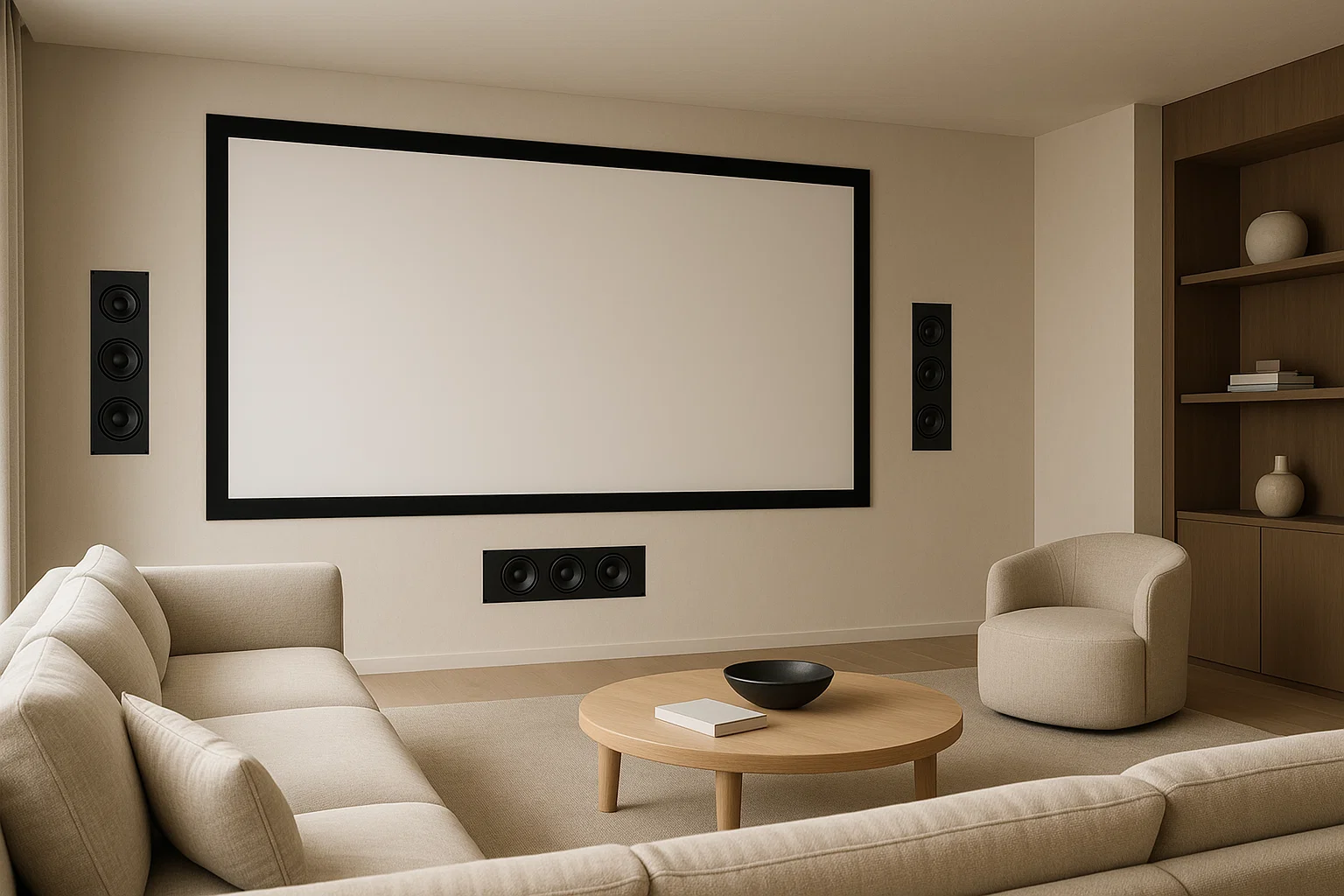
How to Conceal in Wall Speaker Wires: The Complete Guide for Clean In-Wall Speaker Installations?

About Author: Kevin Wu
Founder & Principal Audio Engineer, LECOVITA
Specialize in acoustic engineering, high-fidelity speaker and amplifier design, precision manufacturing, sonic innovation, immersive audio solutions, and premium audio system development.
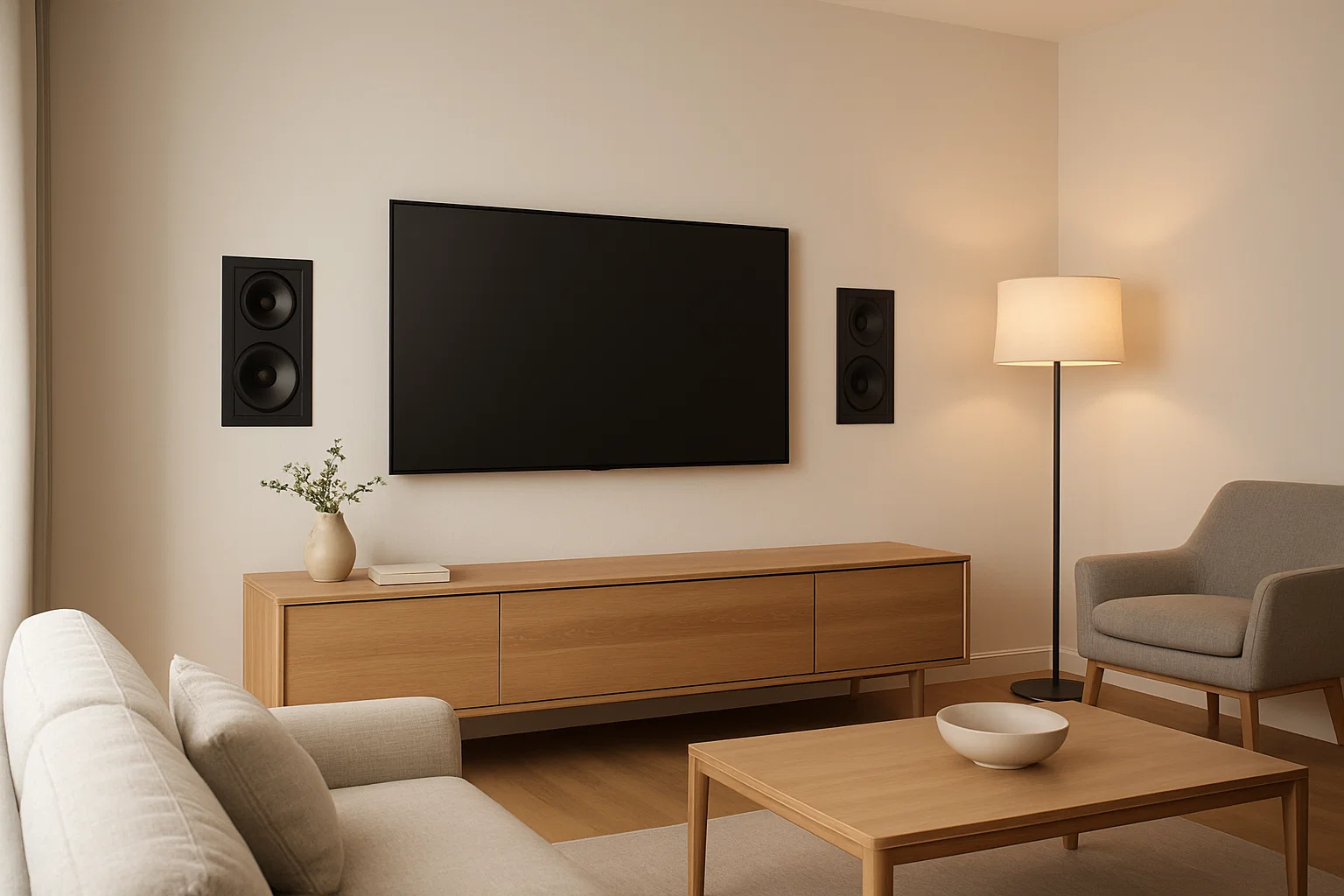
Table of Contents
- Why Concealing Speaker Wires Matters
- Before You Start: Safety, Planning & Tools
- How to Conceal Speaker Wires in Wall – Step-by-Step
- Alternative Solutions If Wall Wiring Isn’t Feasible
- Common Mistakes to Avoid
- Expert Tips for a Professional Finish
- FAQs About Concealing Speaker Wires
- Final Thoughts — A Cleaner Sound Starts Behind the Wall
Why Concealing Speaker Wires Matters
The Visual Impact of Exposed Cables
When setting up a home theater or sound system, exposed cables and speaker wires can be a major eyesore. Cluttered cables not only disrupt the overall design of the room but also make an otherwise modern, sleek space appear unprofessional. For users who are looking for high-quality audio-visual experiences, exposed wires in the living room or home theater stand out as a distraction from the ambiance, making the space look less polished.
As modern homes increasingly prioritize interior design aesthetics, hiding speaker wires plays a crucial role in maintaining a clean and orderly environment. Concealing speaker wires is one key step in achieving this, ensuring the visual focus remains on the sound system and design elements, rather than on the cables or outlet panels.
The Benefits of a Professional-Looking Setup
A professional-looking installation does more than just enhance the home’s aesthetics — it also adds value to the audio system itself. By concealing wires within the walls, you eliminate the unsightly and messy cables that can distract from the room’s overall design, making the setup appear more polished and high-end.
Another key benefit of a clean installation is the flexibility it provides in setup. In-wall wiring gives you the freedom to install speakers in more flexible locations, without worrying about visible cables cluttering up the space. This approach is not just about looks; it also improves the overall audio experience, preventing wires from interfering with sound quality and helping to achieve clearer, more immersive sound.
In-Wall Speakers: The Ideal Solution for Hidden Wiring
When it comes to concealing speaker wires, in-wall speakers are the ideal solution. Designed to be embedded directly into the wall, in-wall speakers completely eliminate the need for visible brackets and external cables. Compared to traditional speakers, in-wall models provide a much more streamlined solution, allowing for a more aesthetically pleasing and efficient wiring setup.
One of the major advantages of in-wall speakers is that they usually come with hidden wiring options. These speakers have built-in ports for easily connecting your audio system while keeping everything out of sight. By combining in-wall speakers with proper wall wiring techniques, you can achieve a completely hidden cable system, whether it’s for the audio signal or power supply, without disrupting the overall decor of the room.
Not only does this method improve the visual appearance of your space by eliminating visible cables, but it also eliminates potential safety hazards associated with exposed wires. By placing the wires inside the walls, you ensure long-term durability by protecting them from damage or wear that could occur with exposed cables.
Before You Start: Safety, Planning & Tools
Is It Safe to Run Speaker Wire in Walls?
Before you begin installing speaker wires in your walls, it’s important to first address safety concerns. Is it safe to run speaker wire through walls? The short answer is yes — but only if you use the right materials and follow local building codes.
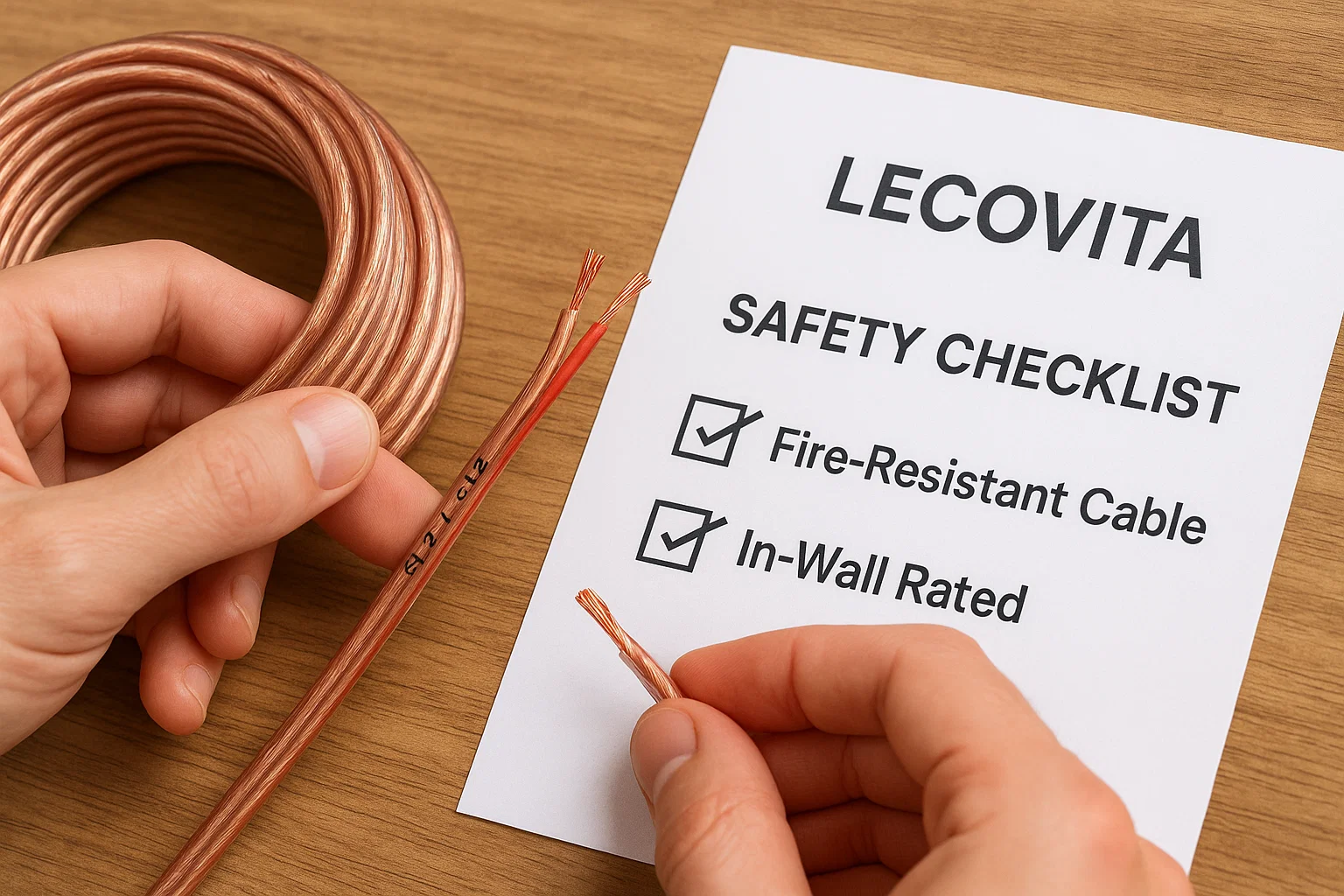
In-wall speaker wires are specially rated for wall installation. To ensure your wiring is safe, make sure to use CL2 or CL3-rated cables. These cables are designed to be fire-resistant and meet safety standards, protecting your home from electrical hazards. Never use standard speaker wire in walls, as it may not meet these essential safety requirements.
Additionally, avoid running wires through wet or damp areas or near high-voltage electrical wiring. If you’re unsure about local electrical codes, it’s always a good idea to consult with a professional electrician to ensure your installation complies with regulations.
What Kind of Speaker Wire is Wall-Rated?
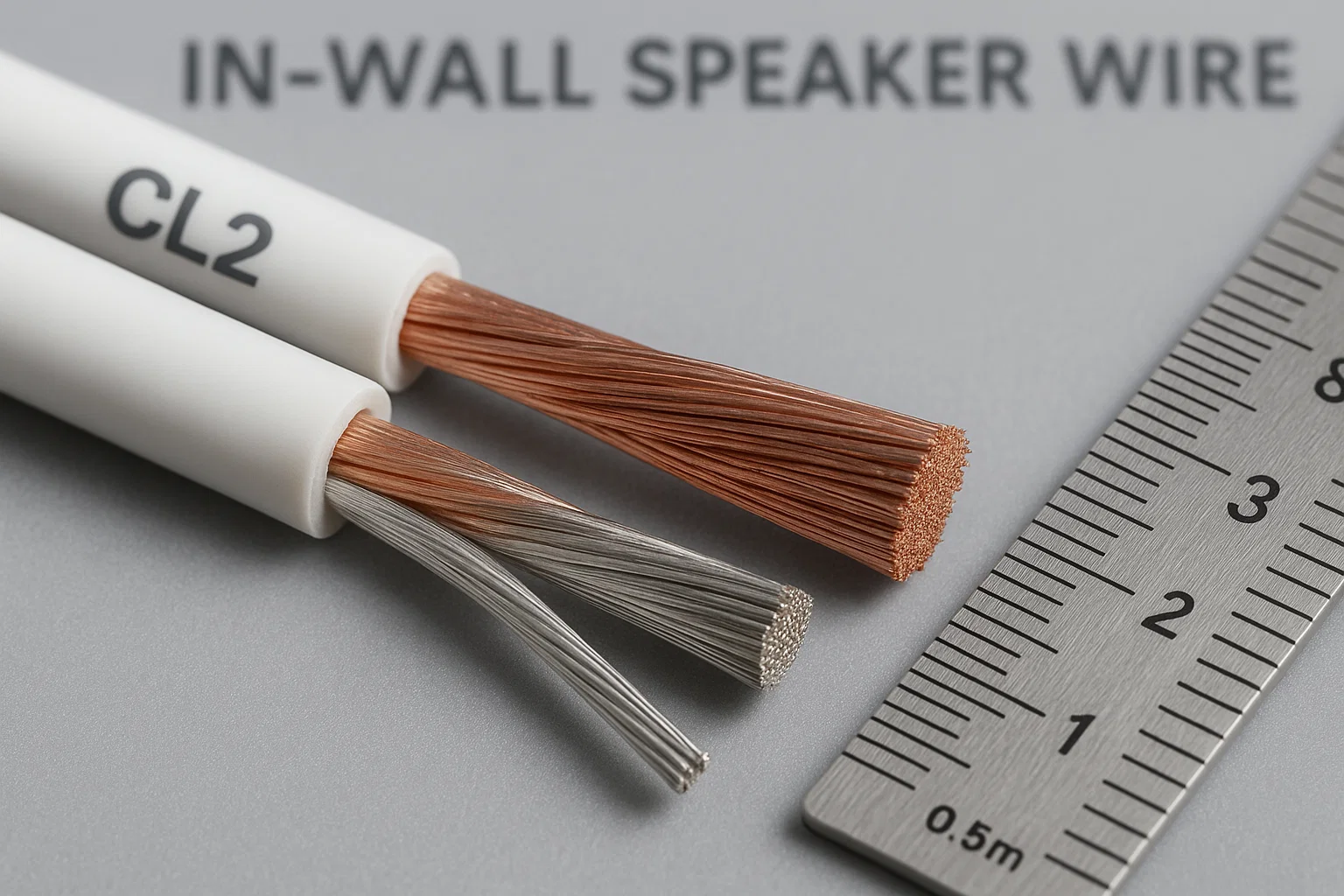
When selecting speaker wire for wall installation, always opt for CL2 or CL3-rated speaker wire. These ratings indicate that the wire has been tested and certified for safe use within walls. CL2-rated wire is suitable for residential applications, while CL3-rated wire is rated for more demanding commercial environments, offering extra protection against heat and fire.
Choosing the right speaker wire ensures your system operates safely and at its peak performance. For longer cable runs or higher-power setups, consider using thicker gauge wire (e.g., 14 AWG or 12 AWG) to reduce resistance and maintain high-quality sound.
In addition to ensuring the wire’s safety and quality, make sure to purchase high-quality connectors and terminals that can securely hold the wires in place. This will not only help with safety but will also improve the overall performance of your sound system.
Tools & Materials You’ll Need
Before you begin the installation process, gather all the necessary tools and materials. Here’s a list of the most common items you’ll need:
-
Stud Finder: To locate the studs in your wall for safe wire placement and to avoid drilling into pipes or electrical wires.
-
Fish Tape: A tool used to guide the speaker wire through the wall cavity. Fish tape is especially helpful for running wires across large spaces or through tight areas.
-
Drywall Saw or Oscillating Tool: For cutting small, clean holes in the wall where the wires will enter or exit.
-
Cable Staples or Nail Clips: To secure wires inside the wall and keep them in place once they’re fed through.
-
Wall Plates & Connectors: These provide a clean, professional finish for your installation. They allow you to securely attach speaker wires at the point where they enter the wall and connect to your speakers.
Make sure you have all your tools within reach before starting the installation process. Taking the time to properly prepare will make your project go much more smoothly.
How to Conceal Speaker Wires in Wall – Step-by-Step
Step 1 – Plan the Wire Route: Wall Cavity, Stud Finder & Outlet Locations
Before drilling any holes or cutting into the wall, it’s essential to carefully plan your wire route. Where will the wires run inside the wall? Are there any obstacles like studs, pipes, or electrical wires?
The first tool you’ll need is a stud finder. Use it to locate the studs behind the wall. The studs will serve as a guide for your wiring, ensuring that you don’t drill into anything you shouldn’t. Once you’ve identified the studs, map out the ideal path for your speaker wire, avoiding places where electrical wiring or plumbing runs. Ideally, you want to run the wire in an area with enough space between the studs, known as the wall cavity.
Next, determine where you want the wires to enter and exit the wall. This will typically be at the speaker locations on one side and the audio source (e.g., receiver or amplifier) on the other. Measure carefully to ensure that your holes line up properly and that the cable won’t get tangled or obstructed by studs.
Step 2 – Cut Entry and Exit Holes (How to Use an Oscillating Tool or Drywall Saw)
Once you’ve mapped out your wire path, it’s time to cut the holes for the wire to pass through. Cutting drywall properly is crucial to avoid unnecessary damage or extra repair work.
Use a drywall saw or oscillating tool to make small, precise cuts where you marked your entry and exit points. For a cleaner, more professional look, opt for an oscillating tool, as it allows for more control and minimizes drywall damage. Make sure the hole is just big enough for the wire to pass through. The goal is to avoid cutting more of the wall than necessary to keep the hole as small as possible.
Be mindful of the dust and debris created when cutting drywall. Wear a mask and protective eyewear to avoid inhaling dust or getting particles in your eyes.
Step 3 – Use Fish Tape to Pull Wires Through the Wall Cavity
Now that you have your entry and exit holes, the next step is to actually run the wires through the wall. For this, you’ll need fish tape. Fish tape is a long, flexible tool designed to guide cables through walls.
First, feed the fish tape through one of the holes, into the wall cavity. Once it’s at the other hole, attach the speaker wire to the fish tape using electrical tape. Carefully pull the fish tape back through the wall, dragging the wire along with it. This part of the process may take some patience, especially if you have long runs or tight spaces. Be gentle to avoid damaging the wire or causing tangles.
After the wire is through, make sure it’s not too tight, as pulling it too hard can cause strain on the connections or wire insulation.
Step 4 – Secure and Terminate the Wires with Wall Plates or Jacks
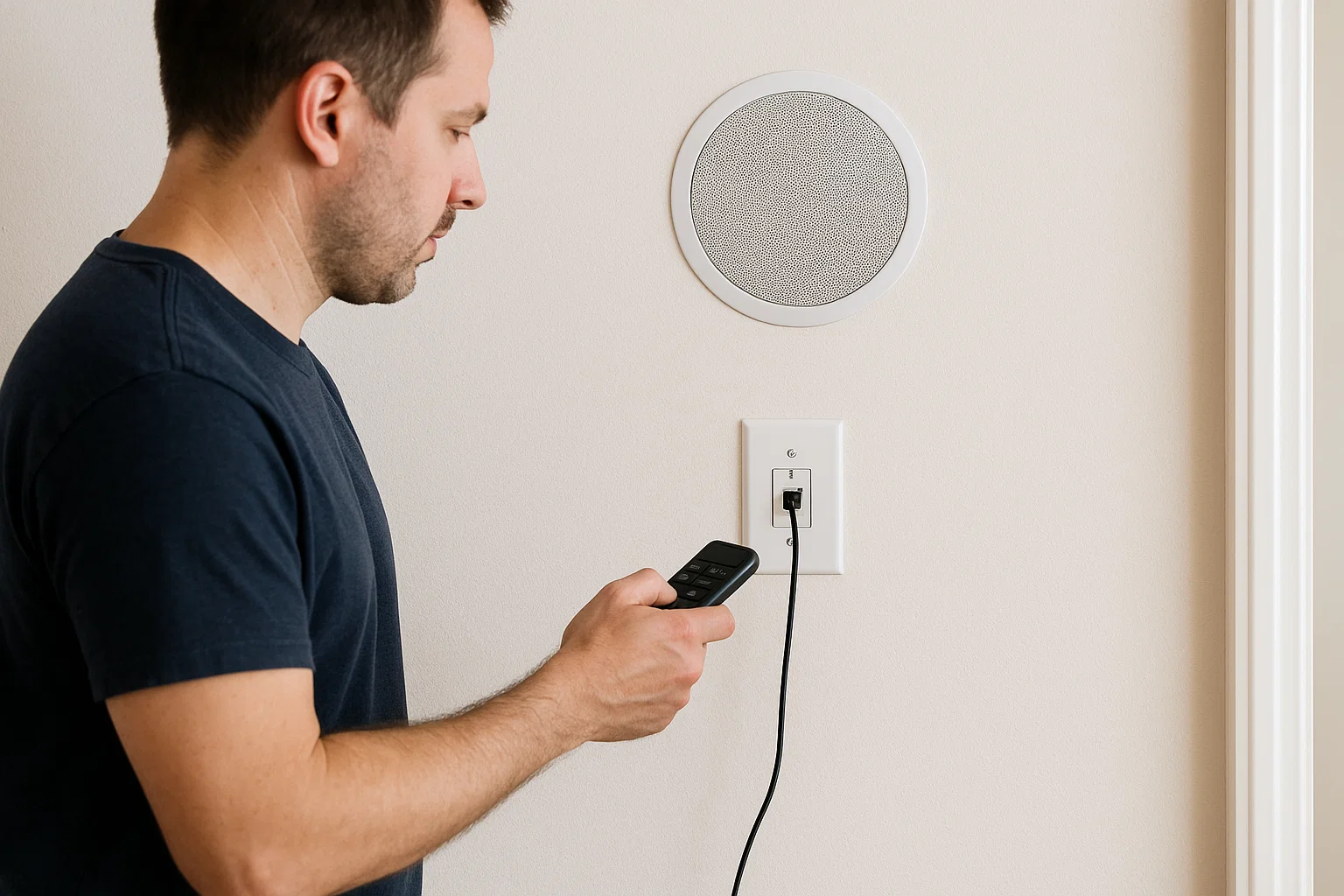
Once your speaker wire is through the wall, the next step is to secure it and prepare it for connection. The most professional way to do this is by using wall plates or wall jacks. These provide a clean, finished look while also keeping the wires safe and secure.
Install the wall plates at the points where the speaker wire enters and exits the wall. You’ll need to terminate the speaker wire by stripping the insulation at the ends and connecting them to the appropriate terminals on the wall plate. Make sure to attach the wires securely — red for positive and black for negative — to avoid any potential short circuits or connection issues.
If you’re using a wall jack, make sure the terminals are firmly in place and that no wire is exposed. Once everything is securely connected, screw the wall plate onto the wall.
Step 5 – Test Your Connections & Patch Walls (If Necessary)
Before closing up the wall and finishing the job, it’s crucial to test your connections. Check the sound output from your speakers to make sure everything is functioning properly. If the sound is clear and there are no issues with the connection, you can proceed with finishing the installation.
If there are any issues or mistakes in your cutting, you’ll need to patch the drywall holes with joint compound and sand the area smooth before painting it to match the rest of your wall. It’s a good idea to paint the patched area with matching wall paint for a seamless look.
Once everything is working and the wall is patched up, you’ll have a neat, clean, and professional-looking in-wall speaker system with hidden wiring.
Alternative Solutions If Wall Wiring Isn’t Feasible
Not every home is suitable for in-wall wiring — and that’s okay. Whether you’re renting, dealing with concrete walls, or simply want a faster, less invasive setup, there are several creative alternatives for hiding speaker wires without cutting into your walls.
Surface-Mounted Cable Channels (Paintable for a Seamless Look)
If cutting into drywall isn’t an option, surface-mounted cable channels (also called raceways) offer a neat and affordable solution. These plastic or PVC channels run along the wall surface and conceal the speaker wires inside. Most are paintable, allowing them to blend in with your wall color for a near-invisible appearance.
Cable channels are ideal for running wires along baseboards, crown molding, or wall corners, and they’re easy to install using adhesive strips or screws.
✅ Pros:
-
No wall cutting or patching required
-
Clean look when painted
-
Easy to remove or upgrade later
⚠️ Cons:
-
Still slightly visible unless perfectly color-matched
-
May not work well on textured walls
Flat Adhesive Speaker Wire for Painted-Over Wall Use
Another clever option is flat adhesive speaker wire — an ultra-thin, tape-like cable that sticks directly to your wall and can be painted over. Known as “ghost wire”, it’s a smart solution for hiding cables in plain sight.
These flat wires can be run vertically or horizontally along drywall and then sealed with drywall compound or paint, making them virtually disappear. While sound quality may not match high-end copper wire, it’s more than adequate for casual home audio setups.
✅ Pros:
-
Completely invisible once painted over
-
Great for tight spaces or minimalist interiors
-
No holes or major construction needed
⚠️ Cons:
-
Can be pricey
-
Limited durability if not sealed properly
-
May not support high-powered speaker systems
Wireless Speaker Options – Pros and Cons Compared to In-Wall Systems
If hiding speaker wires isn’t worth the effort or you want maximum flexibility, wireless speakers offer a truly wire-free experience — at least in terms of signal transmission. Brands like Sonos, Bose, and JBL offer Wi-Fi or Bluetooth-enabled systems that eliminate the need for speaker wire runs.
However, keep in mind that wireless speakers still need power, meaning each speaker requires access to an outlet. Additionally, signal latency, pairing issues, or interference may occur in some environments. For audiophiles or those seeking full surround sound fidelity, in-wall wired systems remain the gold standard.
✅ Pros:
-
No speaker wires at all
-
Quick, flexible setup
-
Easy to relocate or expand the system
⚠️ Cons:
-
Each speaker needs power
-
Can be expensive
-
Signal dropouts in some setups
Common Mistakes to Avoid
Even with the best intentions, DIYers often make small mistakes that can cause big problems down the road. Here are the most common pitfalls to avoid when concealing speaker wires in your wall — and how to fix or prevent them.
Running Speaker Wires Too Close to Electrical Lines
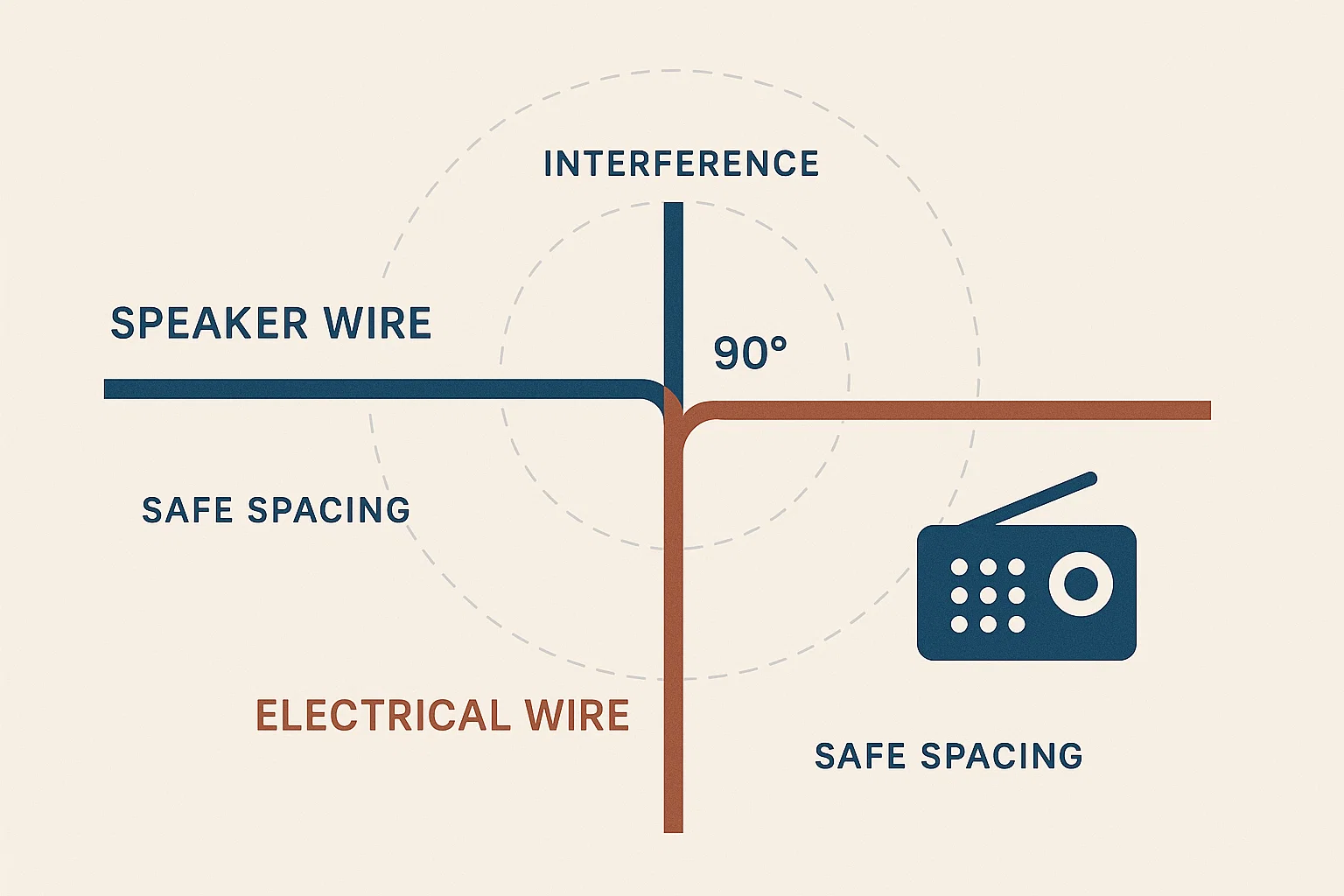
One of the most overlooked mistakes is routing speaker wires too close to electrical wiring. When low-voltage speaker wires are run parallel and closely alongside high-voltage power cables, electromagnetic interference (EMI) can occur — leading to buzzing, humming, or degraded sound quality.
To avoid this:
-
Keep at least 12 inches (30 cm) of distance between speaker wires and electrical lines.
-
If the two must cross paths, make sure they do so at a 90-degree angle to reduce interference.
-
Use shielded speaker cables if separation isn’t possible.
Using Non-Rated Wire Inside Walls
Another major safety hazard is using standard speaker wire that’s not rated for in-wall use. Non-CL2/CL3 wires lack the proper insulation and fire resistance required for building codes. Installing the wrong wire could violate local codes or even pose a fire risk.
Always:
-
Use CL2 or CL3-rated wire for in-wall installations.
-
Check product packaging for in-wall safety labels.
-
Avoid reusing old, uncertified wire from previous setups.
Forgetting to Document the Wire Route
Once the wires are inside your walls, they’re no longer visible — which means forgetting where they are can lead to big issues later. Whether you’re hanging shelves, drilling into the wall, or remodeling, not knowing where your wires run can result in damaging them.
Prevent this by:
-
Taking photos of the installation process at every stage.
-
Drawing a simple wall layout diagram with wire paths marked.
-
Storing this information digitally or printed near your AV system for easy reference.
Over-Tightening or Pinching the Wire
During the process of securing wires with staples or routing them through holes, some users over-tighten or pinch the wire, damaging the insulation or causing shorts. Speaker wires are delicate, and crushing the wire can reduce performance or lead to long-term failure.
Tips to avoid this:
-
Use cable staples with built-in padding or clips instead of nails or zip ties.
-
Leave some slack in the wire runs to avoid tension.
-
Never bend wires at sharp angles — use gentle curves.
Expert Tips for a Professional Finish
Concealing speaker wires in the wall isn’t just about functionality — it’s also about getting that clean, polished look that makes your space feel high-end. Here are some expert-level tips to help you take your DIY installation from “good enough” to “professional-grade.”
How to Patch and Paint Wall Holes Cleanly
Even with careful planning, you’ll likely need to make a few small holes in the wall to route speaker wires. Once the wires are in place, don’t settle for sloppy patchwork — clean repairs are key to achieving an invisible finish.
Here’s how to do it right:
Use lightweight joint compound to fill small holes or gaps.
Sand the surface with fine-grit sandpaper until smooth.
Apply primer before painting for better color matching.
Use touch-up paint that exactly matches your wall finish (bring a chip to the paint store if needed).
Matching Faceplates and Outlet Boxes to Your Interior
Standard wall plates and boxes work well, but for a truly seamless look, choose hardware that blends with your interior décor.
Pro tips:
-
Opt for low-profile wall plates or paintable plates to match your wall color.
-
Choose faceplates with brush openings to neatly guide speaker wires in/out of the wall.
-
Consider hidden speaker terminals with banana plugs for a professional audio finish.
These small upgrades can dramatically improve the final appearance of your setup.
When to Call a Professional (and How Much It Costs)
While many homeowners can manage in-wall wire concealment with the right tools and preparation, there are situations where hiring a professional makes more sense:
Call an expert if:
-
Your walls are concrete, brick, or plaster (hard to cut or patch)
-
You’re unsure about electrical safety codes
-
You need multiple wires routed through multiple rooms
-
You’re installing a high-end home theater where aesthetics are critical
Average cost for professional speaker wire installation ranges from $150–$500+, depending on complexity, wall type, and regional rates. But the payoff? A job done right — fast, clean, and up to code.
FAQs About Concealing Speaker Wires
Addressing frequently asked questions helps readers feel more confident about taking on an in-wall speaker wiring project, and it also enhances SEO by matching long-tail search queries. Below are concise, experience-backed answers to the most common concerns.
❓ Can speaker wire be run in the wall legally?
Yes — but only if you’re using wire that is rated for in-wall use, such as CL2 or CL3-rated speaker wire. These types of cables meet fire safety standards and are approved under most residential building codes.
❓ What is the easiest way to hide speaker wire without cutting into the wall?
The simplest non-invasive methods include:
-
Paintable cable raceways
-
Flat adhesive speaker wire that can be painted over
-
Baseboard or crown molding routing
These options require minimal tools and cause no permanent wall damage — perfect for renters or temporary setups.
❓ Do in-wall speakers require in-wall wiring?
Not always, but it’s highly recommended. In-wall speakers are designed for a clean, flush-mounted look. To achieve this effect, wiring should ideally be routed through the wall cavity to avoid external clutter. However, for situations where in-wall routing isn’t possible, surface-mounted wire channels can work as an acceptable compromise.
❓ What type of speaker wire should I use for in-wall installations?
Use CL2 or CL3-rated wire, depending on your local building codes. For most residential applications, 16-gauge (AWG) wire works well for runs under 50 feet, while 14-gauge is recommended for longer distances or higher power systems. Avoid cheap, non-rated wire — it’s not safe or durable for in-wall use.
❓ How do I avoid interference from electrical wiring?
To prevent signal interference:
-
Keep at least 12 inches (30 cm) between speaker wire and electrical wire
-
Never run the wires in parallel for long distances
-
Cross them at 90-degree angles if paths must intersect
-
Use shielded speaker wire when necessary
❓ Can I convert a wired speaker setup to wireless instead?
Yes. Products like wireless speaker adapters, streaming amplifiers, or complete wireless home theater systems (e.g. Sonos or Bose) can help eliminate wire clutter — though most still require access to power outlets. Note that wireless systems may have limitations in sound quality or latency, especially in large rooms.
❓ What if I damage the wall or hit a pipe while cutting?
This is why planning is everything. Use a stud finder to locate studs, pipes, or existing wires before cutting. If you accidentally hit something:
-
Stop immediately and assess the damage
-
Patch drywall with joint compound and sandpaper
-
Consult a plumber or electrician if you’ve hit active plumbing or electrical lines
❓ Should I document where the wires are in the wall?
Absolutely. Take photos of the wiring layout before sealing the wall and draw a simple sketch showing the wire paths. This is invaluable later if you:
-
Move the speakers
-
Install shelving
-
Remodel the space
Final Thoughts — A Cleaner Sound Starts Behind the Wall
Concealing speaker wires in your wall may seem intimidating at first, but with the right tools, techniques, and planning, it’s a project well within reach — whether you’re a seasoned DIYer or just getting started. From choosing CL-rated speaker wire to using fish tape and patching drywall, each step contributes to a cleaner, safer, and more professional audio setup.
For the best results, especially in modern home theaters or multi-room sound systems, in-wall speakers paired with properly concealed wiring offer unmatched elegance and sound performance. No clutter. No distractions. Just immersive, uninterrupted sound.
At LECOVITA, we specialize in custom in-wall speaker systems engineered for seamless installation and optimal audio clarity. Whether you’re an installer, designer, or homeowner, our solutions are built for performance and clean integration — with wiring options designed to disappear.
🔧 Ready to Upgrade Your Setup?
Explore our full range of in-wall speaker solutions or contact our audio specialists for a custom consultation.