Commercial-Grade Garden Speakers vs Consumer Models: What’s the Difference?

About Author: Kevin Wu
Founder & Principal Audio Engineer, LECOVITA
Specialize in acoustic engineering, high-fidelity speaker and amplifier design, precision manufacturing, sonic innovation, immersive audio solutions, and premium audio system development.
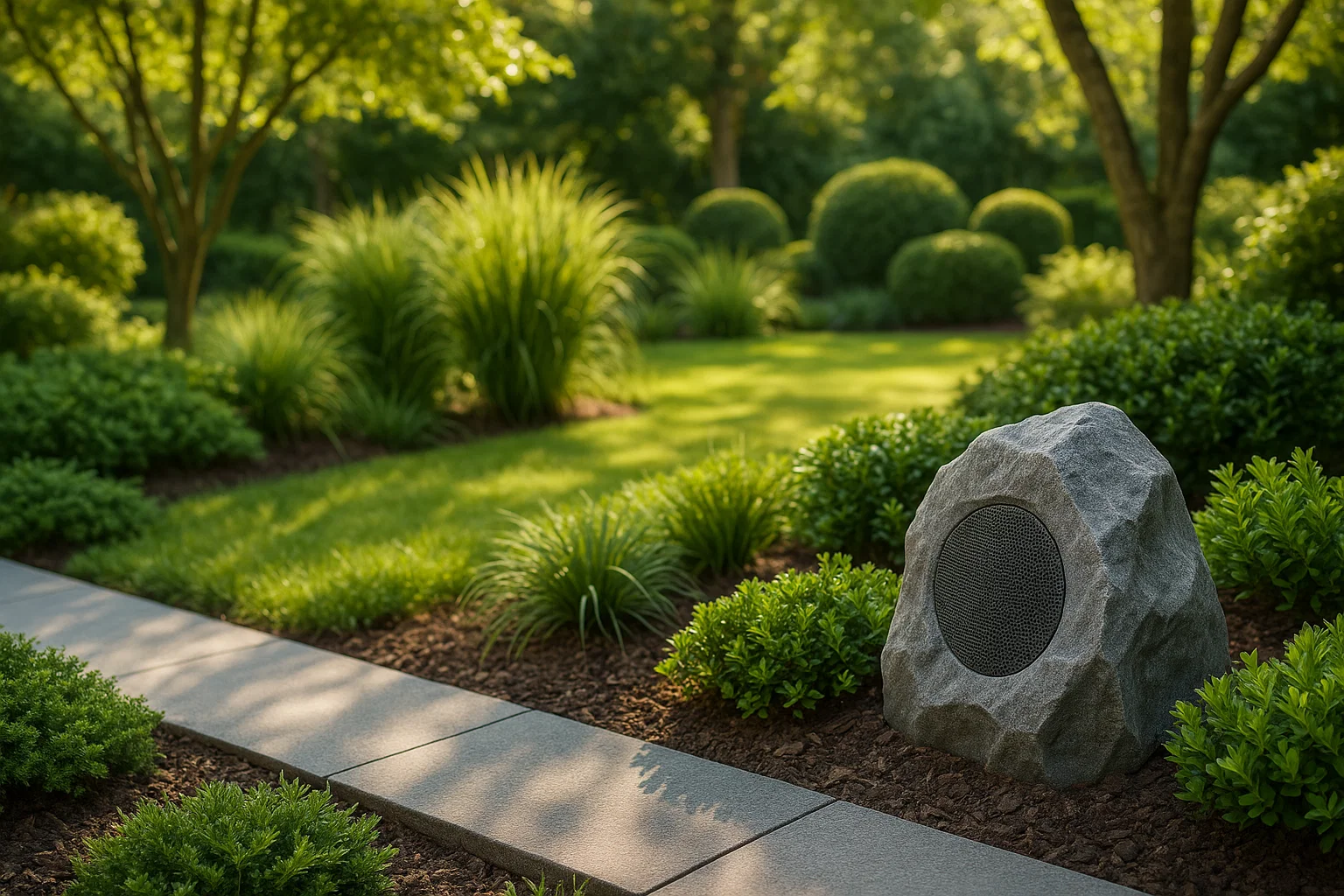
Table of Contents
- Introduction – Bringing Sound to Your Garden
- Understanding Garden Speakers and Their Uses
- Key Differences Between Commercial and Consumer Garden Speakers
- Which One Do You Need? (Consumer vs Commercial Decision Guide)
- Key Factors for B2B Buyers (What Procurement Should Consider)
- Lecovita’s Expertise and Solutions
- Conclusion – Elevate Your Outdoor Sound
Introduction – Bringing Sound to Your Garden
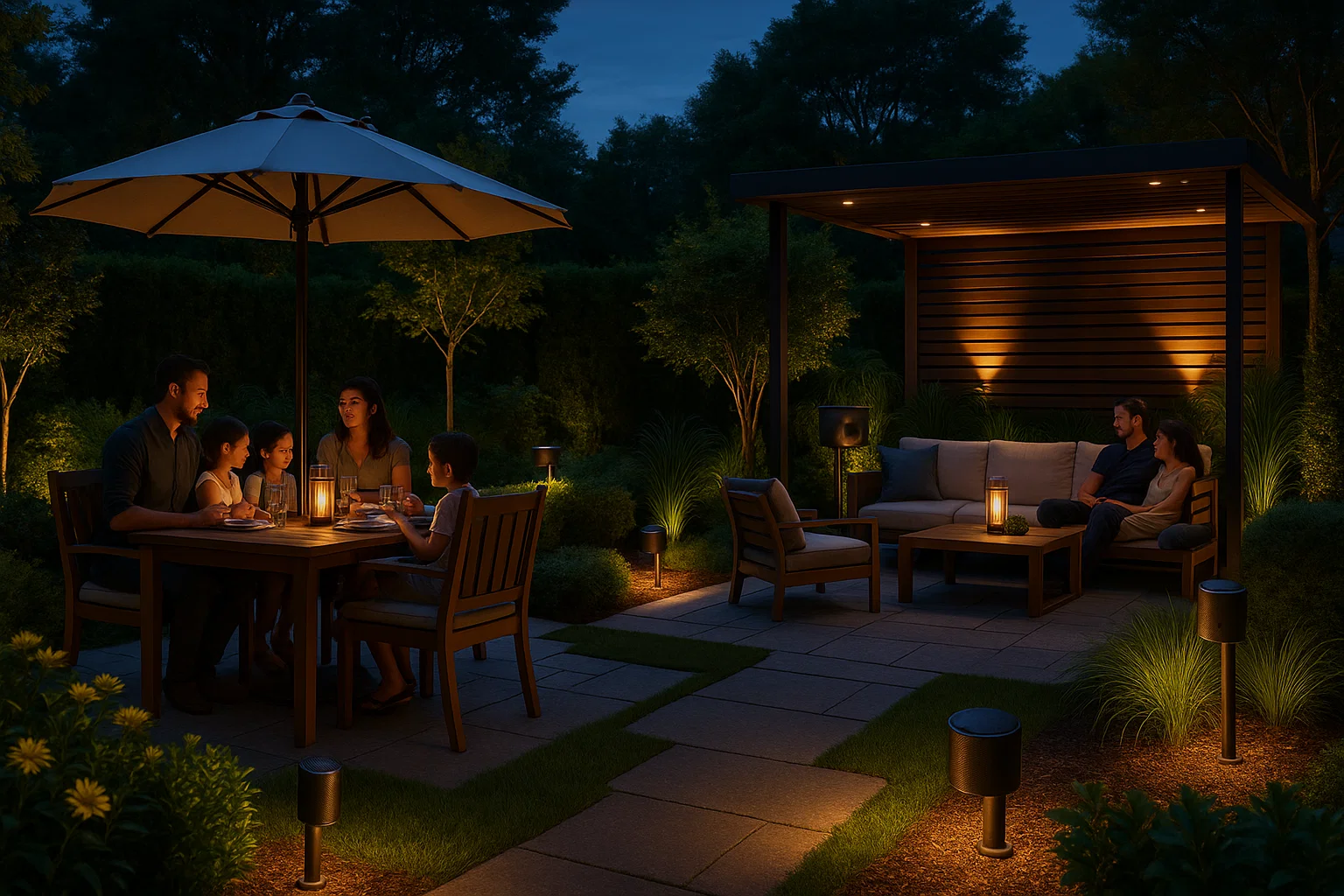
In recent years, the desire to extend audio experiences beyond the walls of homes and commercial buildings has grown exponentially. Whether it’s a private backyard hosting weekend barbecues or a hotel garden welcoming guests with ambient music, garden speakers have become a vital part of outdoor design.
But as the demand for outdoor sound systems rises, so does the variety of speaker options available. From affordable wireless units for casual listeners to commercial-grade garden speakers designed for professional installations, the differences are often unclear to the average buyer — and even to some businesses. Many users searching for “garden speaker” are unsure whether a consumer model will meet their needs or if a more robust, scalable solution is worth the investment.
At Lecovita, a professional home speaker system manufacturer and solution provider, we’ve helped integrators, contractors, and homeowners alike make informed choices based on performance, reliability, and budget. In this guide, we’ll clearly explain the key differences between commercial and consumer garden speakers, enabling you to select the right option for your landscape project — whether you’re designing a family-friendly backyard or outfitting an entire resort.
According to a recent 2025 outdoor audio market trend analysis, demand for scalable outdoor sound systems is rising across hospitality and entertainment sectors.
Understanding Garden Speakers and Their Uses
Not all garden speakers are created equal — and not every outdoor space has the same requirements. Before diving into technical comparisons, it’s essential to understand who garden speakers are designed for and how they’re typically used across different environments. Broadly, we can group use cases into two categories: consumer-level DIY setups and commercial outdoor audio systems.
Home Gardens & DIY Setups (Consumer Use)
For most homeowners, garden speakers are an extension of personal entertainment. Whether it’s background music during a barbecue or relaxing tunes by the patio, the priority is simplicity, aesthetic appeal, and affordability.
Consumer garden speakers often come in wireless or Bluetooth-enabled formats, requiring minimal installation. They’re typically designed to blend in with outdoor décor — shaped like rocks, planters, or low-profile fixtures — and provide adequate sound coverage for small-to-medium-sized spaces like patios, decks, or private gardens.
Key features consumers often seek:
-
Plug-and-play convenience
-
Weather resistance (usually IPX4 to IPX5)
-
Battery or solar-powered options
-
Decorative or disguised enclosures
-
Compatibility with smartphones or smart home devices
While they’re ideal for casual use, consumer models may struggle with performance or durability in harsher environments or when more coverage is needed. This is where commercial solutions become essential.

Large Landscapes & Public Spaces (Commercial Use)
When it comes to parks, resorts, restaurants, and other public venues, the expectations for garden speakers are entirely different. In these cases, sound must cover wider areas, operate reliably for extended hours, and withstand a variety of environmental conditions — from rain and wind to extreme heat or humidity.
Commercial-grade garden speakers are engineered to handle such demands. Installed by professionals, they are often part of a larger distributed audio system, using 70V or 100V technology to power multiple speakers across long distances. Their design emphasizes:
-
Heavy-duty weatherproofing (IP65/IP66 and above)
-
High SPL output and wider dispersion angles
-
Scalable installation over thousands of square meters
-
Compatibility with commercial amplifiers and control systems
-
Long-term durability and support for continuous use
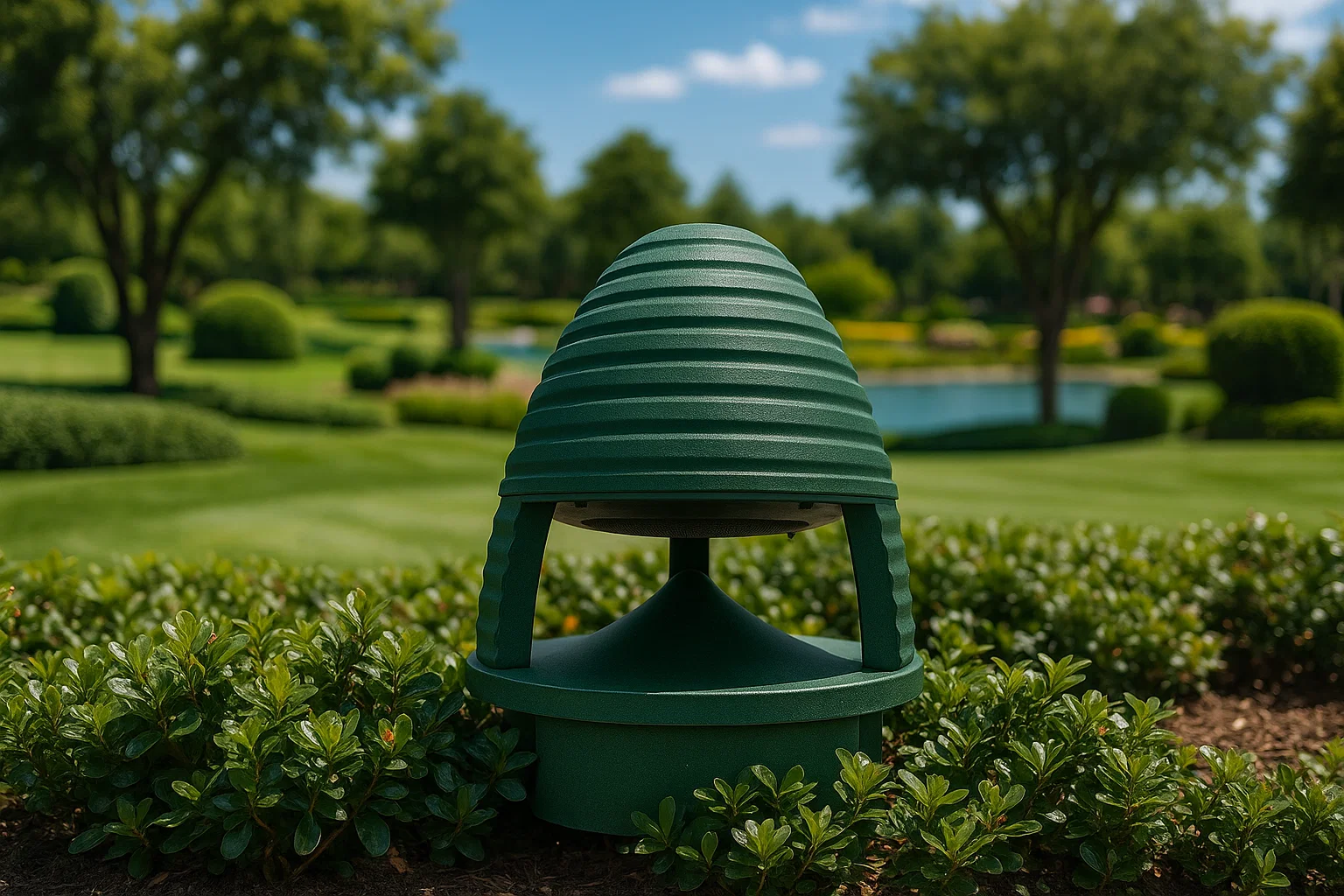
They may also be integrated with landscape architecture, buried in-ground, mounted to trees or structures, or positioned strategically to avoid visual clutter while delivering even, immersive sound.
For business applications, commercial speakers represent a strategic investment — offering not just superior sound but also operational stability and brand experience enhancement.
Key Differences Between Commercial and Consumer Garden Speakers
While both types of garden speakers are designed to bring audio into outdoor spaces, the differences between commercial-grade and consumer models are significant — from how they’re built to how they perform over time. Understanding these distinctions is crucial for selecting the right solution for your project.
Build Quality & Weatherproofing
Outdoor environments are harsh — exposure to UV rays, rain, dust, insects, and extreme temperatures can all degrade speaker performance over time. That’s where build quality and weather protection come into play.
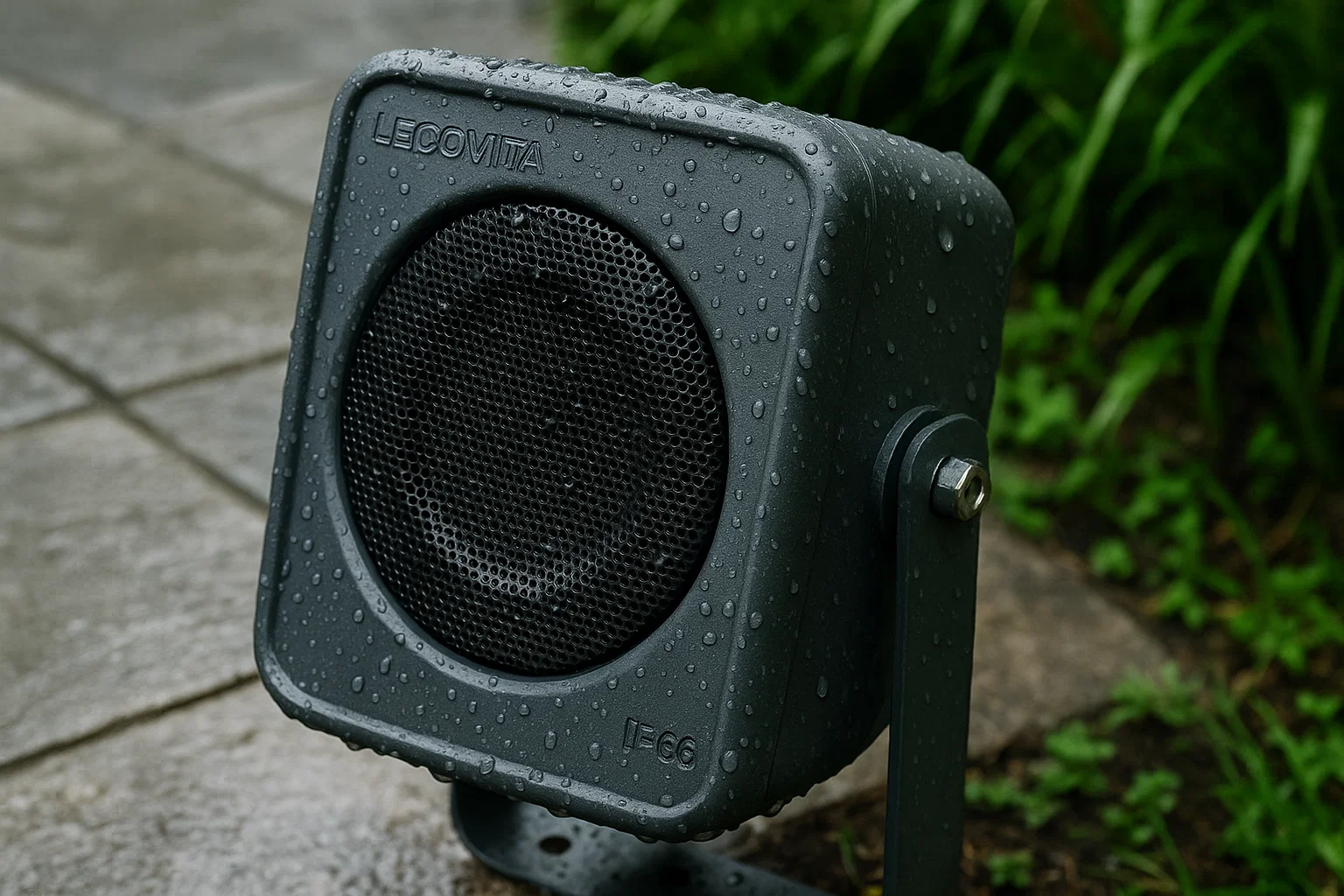
Commercial-grade garden speakers are engineered to meet IP65 or IP66 weatherproofing standards, meaning they can withstand heavy rain, dirt ingress, and even low-pressure water jets. Their enclosures are typically made from UV-resistant composite materials, marine-grade plastics, or aluminum and often include rust-proof grills and waterproof terminals.
By contrast, many consumer models are weather-resistant, not weatherproof. While sufficient for occasional use, they may only carry ratings of IPX4 or IPX5 — suitable for splashes, but not prolonged outdoor exposure. They’re more likely to fade, crack, or corrode over time if left outdoors year-round.
Summary:
-
Commercial: Long-term durability, IP65+, built for continuous exposure
-
Consumer: Basic weather resistance, suited for seasonal or light use
Sound Performance and Coverage
Another major differentiator lies in how sound is delivered across space. Commercial projects — like hotel gardens or amusement parks — require consistent, high-quality sound over large areas without creating hot spots or dead zones.
Commercial speakers offer:
-
High power handling (often 50W to 150W+)
-
Wide dispersion to cover more ground per speaker
-
Integration with subwoofers for low-frequency support
-
Even SPL (sound pressure level) across distributed zones
-
Minimal distortion at higher volumes
These systems are designed to operate for long hours at steady output, delivering clear, ambient audio without fatiguing listeners.
Consumer garden speakers, however, are more focused on near-field listening. They might sound great from a patio table but quickly lose impact over distance. Their drivers are usually smaller, and they may lack low-end depth or volume control options.
Summary:
-
Commercial: Wide-area coverage, consistent fidelity, scalable SPL
-
Consumer: Personal use range, limited power/output
Power & Connectivity (70V Systems vs. Consumer Setups)
Power distribution is one of the most overlooked — yet most important — technical differences between commercial and consumer speaker systems.
Commercial setups use 70V/100V line distribution systems  , which allow a single amplifier to power dozens of speakers across long cable runs. Each speaker includes a transformer with multiple tap settings, allowing volume control per zone. This is ideal for hotels, resorts, malls, or landscaped campuses where uniform sound is essential.
On the other hand, consumer models are usually low-impedance (8Ω) and connect directly to standard home receivers. Their wiring distance is limited, and impedance matching becomes complex if more than two or three speakers are connected.
Summary:
-
Commercial: 70V/100V system, scalable, low power loss over distance
-
Consumer: Standard 8Ω wiring, limited scalability, short cable runs only
Installation and Scalability
Installing speakers in a landscaped environment isn’t just about sound — it’s about integrating audio seamlessly into the surroundings while maintaining coverage, consistency, and aesthetic discretion.
Commercial garden speaker systems are designed for large-scale deployment. They can be buried, surface-mounted, or pole-mounted and are often installed by professionals as part of a zoned system. These setups use underground conduit, weatherproof junction boxes, and centralized control — all optimized for long-term maintenance and future expansion.
Scalability is a core advantage:
-
Easily expand from 4 to 40+ speakers
-
Use a single amplifier via 70V/100V distribution
-
Adjust volume per zone or area
-
Integrate into broader systems (paging, background music, etc.)
Consumer models, in contrast, are designed for quick, standalone installation. A homeowner might place two wireless speakers near a seating area, powered by built-in batteries or simple AC outlets. While convenient, these setups offer limited coverage and typically cannot scale beyond a few units.
Summary:
-
Commercial: Professional installation, long cable runs, expansion-ready
-
Consumer: Easy setup, limited coverage, no advanced control options
Price and Warranty
At first glance, commercial-grade garden speakers appear significantly more expensive than consumer models — and in terms of unit cost, they are. However, the value equation shifts when you consider lifespan, reliability, and cost of ownership.
A $300–500 commercial unit may run 10+ years with minimal maintenance, while a $100–150 consumer speaker may need replacing in 2–3 years due to exposure, fading, or failure. Additionally, commercial systems often offer:
-
Extended warranties (2–5 years commercial use)
-
Service agreements or replacement plans
-
Bulk pricing and OEM customization options
Consumer speakers, while affordable upfront, typically come with limited 1-year warranties, and repairs/replacements often mean buying a new unit.
Summary:
-
Commercial: Higher upfront cost, long-term savings, better support
-
Consumer: Lower cost, shorter lifespan, limited protection
Which One Do You Need? (Consumer vs Commercial Decision Guide)
Now that we’ve explored the key differences, the next logical question is: Which type of garden speaker is right for you? The answer depends on your intended use, space size, expectations, and long-term priorities. Below, we break it down for both homeowners and commercial buyers.
For Home Users – When Consumer Models Suffice
If you’re creating a cozy outdoor space for family gatherings, weekend music, or casual ambiance, a good-quality consumer garden speaker is likely enough. They’re ideal for:
-
Small to medium-sized gardens or patios
-
Users who prefer wireless or Bluetooth connectivity
-
People seeking easy, do-it-yourself installation
-
Occasional use (not 24/7 background sound)
-
Aesthetic considerations (rock or lamp-style speakers)
Recommendation: Choose models with at least IPX5 waterproofing, reliable brand support, and sound power suited to the area (e.g., 10–20W per speaker for under 500 sq ft). Consider dual-speaker stereo pairs for better immersion.
💡 Note: If you’re a homeowner with a large property or event space, stepping up to commercial-grade may still make sense — especially for better sound coverage and integration.
For Businesses & Large Spaces – Go Commercial-Grade
For any public or commercial venue, consumer speakers will not hold up to the demands of daily use and large-area coverage. You should consider commercial models if:
-
You manage a hotel, resort, restaurant, park, campus, or outdoor venue
-
Your system needs to run 8+ hours per day, 7 days a week
-
You require even, zone-controlled sound across 1,000+ sqm
-
You plan to expand the system over time
-
You need durable, warranty-backed solutions
-
Your procurement process requires certified products (IP65+, UL, etc.)
Choosing commercial-grade garden speakers is not just about better performance — it’s about protecting your investment, simplifying maintenance, and ensuring guest satisfaction.
✔️ If you need help evaluating your outdoor project, Lecovita’s team offers custom consultation and OEM/ODM support, helping integrators and contractors build scalable, professional audio environments.
Key Factors for B2B Buyers (What Procurement Should Consider)
For distributors, integrators, and project decision-makers, choosing the right garden speaker solution goes far beyond product specifications. It involves assessing scalability, durability, supply reliability, and manufacturer support — all of which impact long-term performance and cost-efficiency.
Here are the most critical factors B2B buyers should evaluate before making a procurement decision:
🔧 Bulk Availability & Customization Options
A commercial installation may require dozens or even hundreds of speakers — all with matching design, performance, and delivery timeline. Lecovita supports OEM/ODM customization, including:
-
Custom logos and housing colors
-
Transformer tap settings (70V/100V)
-
Branded packaging for resale or white labeling
-
Custom cabling or mounting solutions
These services ensure seamless brand alignment and project cohesion.
📋 Compliance with Commercial Standards
Many commercial projects must meet specific regulations or client requirements. Lecovita provides:
-
IP65/IP66 certified weatherproofing
-
RoHS/CE/UL/FCC certifications as needed
-
Engineering support for system design documents and tech drawings
This allows smooth approval from architects, consultants, or local regulators.
📈 Total Cost of Ownership (TCO)
-
Although commercial speakers cost more per unit, they last longer, fail less often, and deliver stable performance even in harsh environments. Compared to replacing consumer models every 2–3 years, commercial systems offer:
-
Reduced maintenance costs
-
Longer replacement cycles
-
Better value across multi-year use
-
🤝 Vendor Support & Technical Service
-
B2B clients need more than a one-time product — they need a reliable partner. Lecovita provides:
-
Pre-sales system design consultation
-
Dedicated project managers
-
Post-sale technical assistance and part replacement
-
Flexible lead times, including expedited production for urgent orders
-
📦 Supply Chain Stability
For repeat projects or phased rollouts, consistent inventory and lead times are essential. As an experienced manufacturer, Lecovita offers:
-
Predictable production scheduling
-
MOQ flexibility for pilot projects
-
Global export expertise with full documentation (CO, CI, PL, HS Code support)
✅ Tip for specifiers and AV integrators: If you’re working on a landscape project with long-term client needs, Lecovita can help design a modular, upgradeable outdoor speaker system that scales as the venue grows.
Lecovita’s Expertise and Solutions
At Lecovita, we don’t just manufacture outdoor speakers — we engineer complete home and commercial speaker system solutions tailored to your project’s scale, budget, and technical requirements. With years of experience serving both residential clients and commercial integrators worldwide, we’ve built a reputation for reliable sound performance, flexible production, and consistent supply.
Here’s how we stand out:
✅ Manufacturing for Performance and Longevity
All Lecovita outdoor speakers are designed with:
-
High-grade weatherproof enclosures (IP65+ rating)
-
UV-resistant and corrosion-proof materials
-
Long-life drivers tuned for wide dispersion and clarity
-
Compatibility with 70V/100V systems for large-scale integration
We control the full manufacturing process in our ISO-certified facility, allowing precision in acoustic tuning, component selection, and quality assurance.
⚙️ OEM / ODM Support for Global Clients
Whether you’re an integrator looking to source under your own brand or a business seeking tailored features, we offer:
-
Private labeling and custom branding
-
Tailored packaging and accessories
-
Custom transformer taps, enclosures, and driver configurations
-
Full documentation support (CI, CO, HS code, product datasheets)
🌍 Trusted by Global Integrators and Brands
From hotel resorts to shopping centers, Lecovita’s garden speakers are trusted by:
-
AV contractors
-
Outdoor venue designers
-
System integrators and distributors
-
Government and municipal park developers
Our team understands the complexity of commercial sound deployment and is ready to assist with everything from project design to after-sale support.
📩 Let’s Build Your Outdoor Sound System
Whether you’re sourcing for a retail garden speaker brand, developing a custom installation project, or simply looking for a long-term supplier — Lecovita is ready to partner with you.
Conclusion – Elevate Your Outdoor Sound
Choosing between commercial-grade and consumer garden speakers is more than a matter of budget — it’s a decision that affects sound quality, reliability, and the user experience over time. If your needs are modest and focused on occasional home entertainment, consumer models may be sufficient. But for larger projects, frequent use, or environments where durability and scale matter, commercial solutions offer unmatched long-term value.
At Lecovita, we combine engineering expertise, manufacturing precision, and service reliability to help businesses and homeowners create exceptional outdoor soundscapes. Whether you’re managing a commercial installation or sourcing speakers for retail, we’re here to support your success with:
-
Custom manufacturing and OEM branding
-
Technical support and system consultation
-
Reliable bulk supply and timely delivery
🎯 Ready to take your outdoor audio to the next level?
Get in touch with Lecovita to discover how we can help with your next project — from private gardens to public parks and everything in between.