
Retail Audio Systems: Designing the Soundscape to Boost Customer Stay-Time

About Author: Kevin Wu
Founder & Principal Audio Engineer, LECOVITA
Specialize in acoustic engineering, high-fidelity speaker and amplifier design, precision manufacturing, sonic innovation, immersive audio solutions, and premium audio system development.
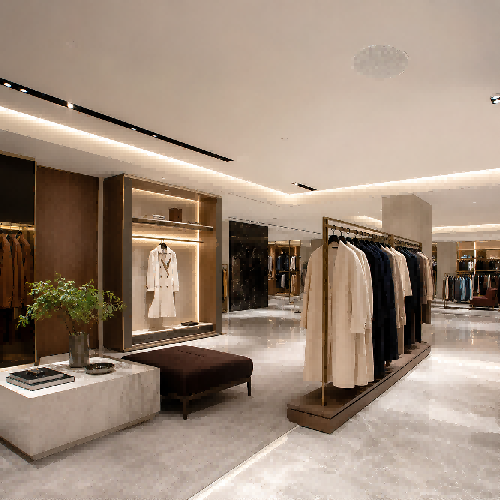
Table of Contents
Retail Audio Systems: Designing the Soundscape to Boost Customer Stay-Time
TL;DR: Background music (BGM) in retail is a powerful tool for sensory marketing. By pairing a strategically curated playlist with premium, low-profile architectural audio hardware, luxury boutiques and commercial retail spaces can increase customer dwelling times by up to 18-35%, directly driving sales conversion.
The Psychology of Sound in Retail Architecture
Audio is a critical yet frequently overlooked element of spatial design. In a premium commercial environment, every sensory touchpoint must align with the brand’s positioning. Research in consumer behavior reveals that the speed, volume, and quality of background music alter how patrons perceive time and value:
-
Slow-Tempo, High-Fidelity Tracks: Encourage customers to slow their pace, browse longer, and associate the environment with higher product quality.
-
Poorly Distributed, Distorted Audio: Triggers subconscious cognitive fatigue, prompting customers to leave the establishment prematurely.
To fully capitalize on this psychology, commercial designers must move away from intrusive, bulky speakers and embrace integrated acoustic systems.
Seamless Integration: The “Invisible Luxury” Aesthetic
Modern retail design focuses heavily on clean lines and minimalism. Traditional surface-mounted cabinet speakers disrupt structural geometry and clash with lighting designs.
The solution lies in architectural flush-mount systems. By implementing frameless magnetic grilles that sit perfectly flush with plasterboard or ceiling tiles, the sound system effectively disappears into the architecture. This ensures that the aesthetic integrity of the space is preserved, delivering an ambient audio experience where the sound is felt everywhere but its source remains hidden.
High-Fidelity Components for Low-Level Listening
Commercial audio systems operate continuously—often up to 12 hours a day—mostly at low to moderate volumes. Lower-tier speakers lose their frequency range when played at low volumes, causing the music to sound hollow or thin.
To maintain rich, background warmth, commercial-grade architectural speakers must employ premium material sciences:
-
Woven Fiberglass Woofers: Provide high structural rigidity to deliver clean, effortless low-end bass even at whisper-quiet volumes.
-
Coaxial Pivoting Tweeters: Enable installers to direct high frequencies toward primary foot-traffic pathways or display areas without altering the physical layout of the ceiling grid.
Commercial Layout Matrix: Retail vs. Hospitality
| Environment Type | Acoustic Goal | Ideal Hardware Match | Recommended Zoning |
| Luxury Boutiques | Ambient warmth, high-end acoustic texture | Frameless 6.5″ Fiberglass In-Ceiling Speakers | Single-zone consistent BGM |
| High-Traffic Retail Stores | Energetic, crisp intelligibility | 5.25″ High-Sensitivity In-Ceiling Speakers | Multi-zone (Entrance vs. Changing Rooms) |
| Boutique Hotels / Cafes | Deep, relaxing bass and clear vocals | 8″ Architectural Speakers + Multi-Zone Amplifiers | Multi-zone (Lobby, Dining, Outdoor Terrace) |
Expert Q&A
Q1: How do I handle volume control across different sections of a large retail store? A: This is achieved through multi-zone power amplifiers or multi-tap 100V transformer systems. A dedicated multi-zone commercial amplifier allows you to independently adjust the volume of different sectors—keeping the entrance energetic while maintaining a quieter, more intimate atmosphere near the cash registers or dressing rooms.
Q2: Will architectural speakers rattle or vibrate against gypsum ceiling boards? A: Rattling occurs when speakers lack proper mounting mechanisms or rigid structural tooling. Look for commercial audio equipment featuring heavy-duty, spring-loaded “dog-leg” mounting clamps. These secure the speaker chassis tightly to the ceiling material, damping mechanical vibrations completely.
Q3: Can these minimalist in-ceiling speakers handle commercial paging/announcements? A: Yes. When paired with high-performance multi-way crossovers, the system successfully separates vocal midrange frequencies from background music frequencies. This ensures that paging announcements remain highly intelligible and crisp without over-driving the drivers.
